
Prescribing the right exercises is only half the job. What happens when the patient leaves the clinic and whether they actually do them, is where a meaningful share of orthopedic rehab outcomes are quietly won or lost.
Home exercise programs are one of the most widely used tools in orthopedic rehabilitation and one of the least reliably followed. The exercises themselves are rarely the problem. Whether they actually get done, consistently, over the weeks between appointments, is where recovery often quietly comes off track.
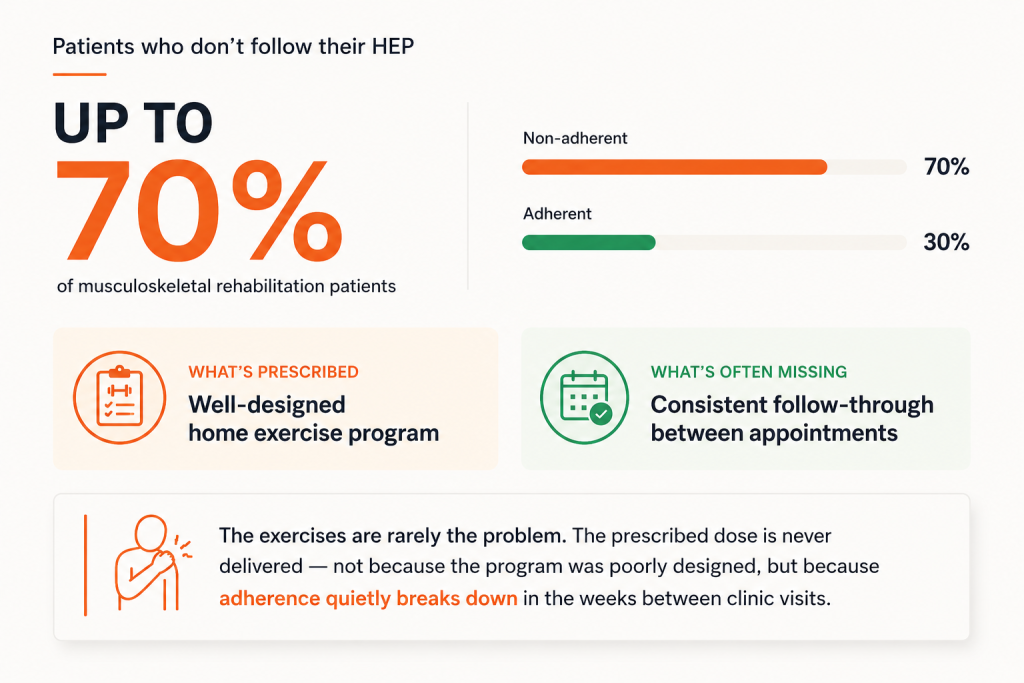
This isn’t a minor compliance footnote. Research on home exercise program (HEP) adherence puts non-adherence as high as 70% in some musculoskeletal populations¹, meaning that for a meaningful share of patients, the prescribed dose of exercise is never actually delivered, regardless of how well the program was designed.
¹ Based on published research on HEP adherence in musculoskeletal populations.
How Big the Gap Actually Is
35% of physical therapy patients reported to fully adhere to their prescribed home exercise program
Source: Industry analysis of PT adherence patterns (SPRY, 2025) — directional estimate, not peer-reviewed primary data
70% non-adherence reported in some musculoskeletal populations, including patients with neck pain
Source: Himler et al., Musculoskelet Sci Pract, 2023
A 2018 study published in the Journal of Orthopaedic & Sports Physical Therapy used concealed accelerometers to compare what patients said they did against what they actually did. The gap between self-reported and objectively measured adherence was consistent enough to suggest that clinics relying purely on patient recall may be working with an incomplete picture, and that the actual dose of exercise being delivered may differ meaningfully from what the chart reflects.⁴
Why Patients Don’t Follow Through
The research on HEP non-adherence is fairly consistent on what the actual barriers tend to be, and “laziness” or simple forgetfulness rarely top the list.
- Time constraints Consistently ranked as the most prevalent barrier PTs observe in their patients: fitting a prescribed routine into an already full daily schedule.²
- Pain during exercise Patients become skeptical of a program that causes discomfort, particularly when they don’t see fast symptom improvement to offset it.³
- Low self-efficacy Patients who don’t feel confident they can perform the exercises correctly, or that the exercises will help, are less likely to follow through consistently.²·⁵
- Program complexity A higher number of prescribed exercises is associated with worse adherence — more isn’t better if patients can’t realistically sustain it.¹·⁶
- Limited social support Patients without encouragement from family, friends, or their care team show weaker adherence over time.⁵
- Insufficient instruction Patients who felt they weren’t given clear enough instructions or handouts were significantly more likely to be non-adherent.³
Notably, depression has strong supporting evidence as a barrier to adherence⁵, and pain affecting more than one body region has been linked specifically to motivational, rather than physical, barriers to completing a HEP.³ Adherence isn’t a single, uniform behavior; it’s shaped by a mix of physical, psychological, and logistical factors that differ from patient to patient.
Why This Matters for Outcomes, Not Just Compliance
Adherence to a HEP directly affects the overall dose of therapeutic exercise a patient receives. Poor adherence can mean a patient is effectively under-dosed relative to what their recovery actually requires³ , and research has associated HEP adherence with superior functional outcomes.³ In other words, this isn’t just a workflow or billing concern. It’s a meaningful lever on whether a patient recovers on the timeline their treatment plan assumes.
An illustrative pattern — rotator cuff repair, weeks 3 to 8
A patient is prescribed a structured HEP following rotator cuff repair. They attend every scheduled PT session and perform well during supervised visits. What’s harder to see: between sessions, they’re completing roughly half of the prescribed home sets, not from defiance, but because two of the exercises cause discomfort and they’re unsure if that’s expected or a sign something’s wrong.
At the eight-week mark, strength gains lag behind the expected trajectory. The clinical team adjusts the plan, but the underlying issue, a patient quietly scaling back specific exercises out of uncertainty, never flagged or discussed, was never visible until the numbers themselves started to lag.
What Actually Moves the Needle
The research points less toward stricter enforcement and more toward addressing the specific barrier in front of a given patient.
- Assess self-efficacy before prescribing: Most PTs don’t formally assess a patient’s confidence in performing a HEP before sending them home with one², despite self-efficacy being one of the more consistently cited predictors of adherence. A short conversation about confidence, not just instruction on technique, can surface problems early.
- Keep the program realistically sized: Programs with fewer, more targeted exercises tend to see better follow-through than long lists that are technically more comprehensive but harder to sustain.¹·⁶
- Set expectations around discomfort: Patients who don’t know what pain is “expected” versus concerning are more likely to quietly stop. Clear guidance on this distinction addresses one of the most commonly cited barriers directly.³
- Don’t rely solely on self-report to gauge adherence: Given the gap between reported and actual adherence found in accelerometer-based research⁴, self-report alone may not give clinicians a fully accurate picture of where a patient’s recovery dose actually stands.
The Underlying Issue
Most of these barriers — pain, uncertainty, low confidence, and an overwhelming program — are addressable. The challenge is that they’re rarely visible to the clinical team until adherence has already broken down and outcomes have started to lag. The gap isn’t a lack of good HEP design. It’s a lack of visibility into what’s actually happening in the weeks between appointments.
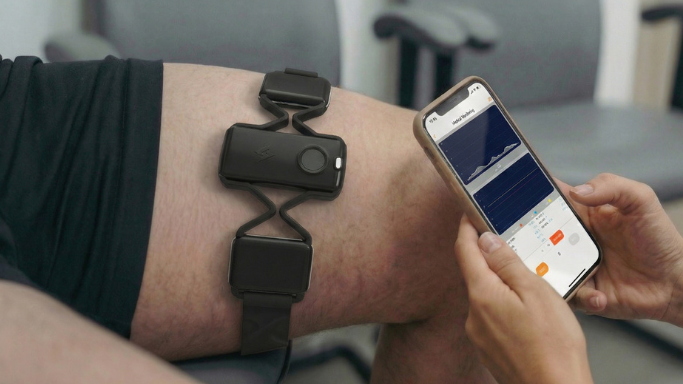
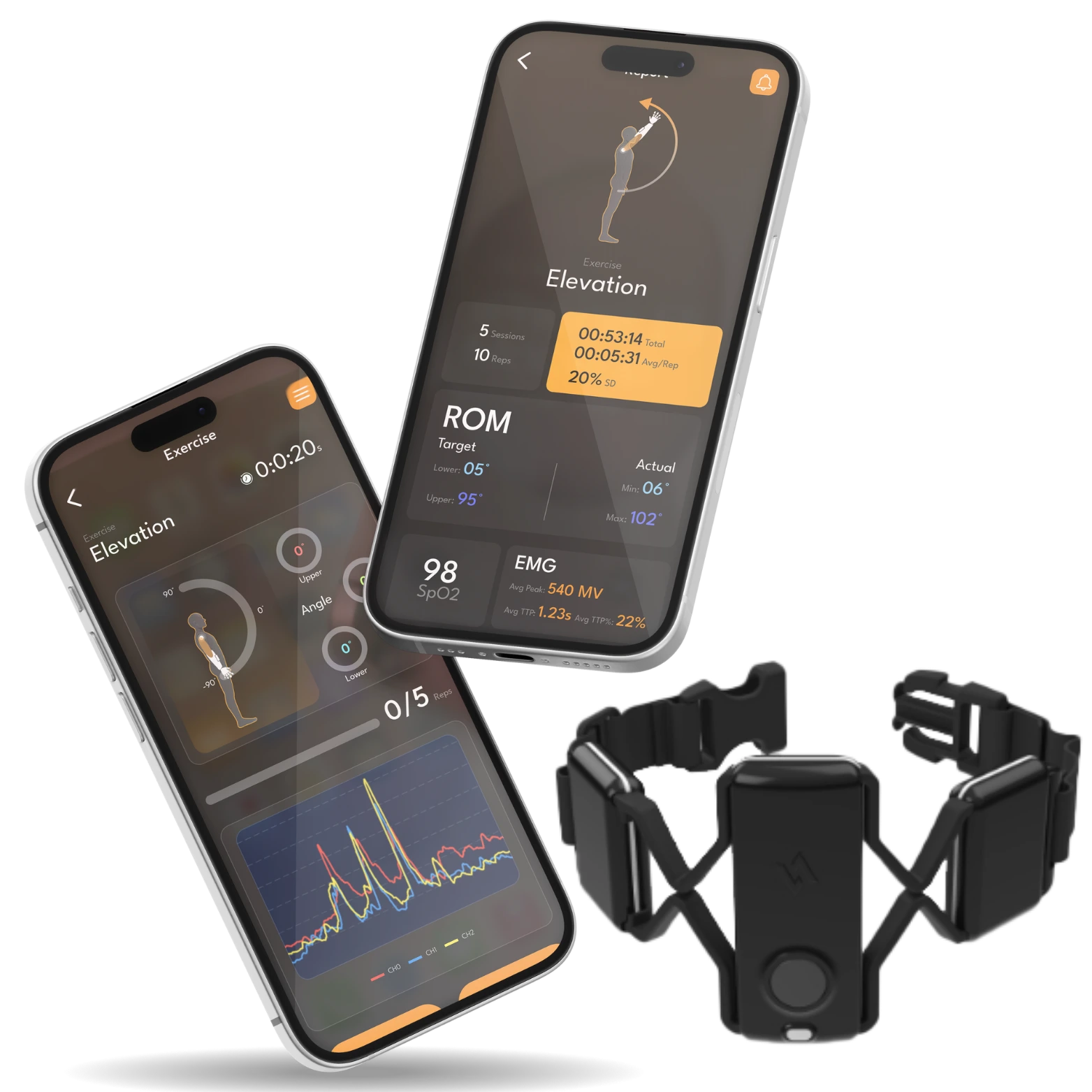
This is one part of a broader pattern this series has explored: a significant share of musculoskeletal recovery happens where clinicians can’t directly observe it. Vulcan has been studying this problem closely through the development of the Vulcan MSK Sensor System, a wearable sensor and analytics platform currently being piloted to give clinicians more continuous visibility into recovery — including the adherence patterns that are otherwise invisible between visits.

See the Vulcan MSK Sensor System
Learn how the wearable sensor and analytics platform are being piloted across hospital, home-care, and clinical practice settings.
References
1. Himler P, Lee GT, Rhon DI, Young JL, Cook CE, Rentmeester C. “Understanding barriers to adherence to home exercise programs in patients with musculoskeletal neck pain.” Musculoskeletal Science and Practice, 2023.
2. “Physical Therapists’ Assessment of Patient Self-Efficacy for Home Exercise Programs.” International Journal of Sports Physical Therapy, 2025.
3. “Adherence and Barriers to Home Exercise Program Participation in Adults With Musculoskeletal Pain.” Archives of Physical Medicine and Rehabilitation / ScienceDirect, 2022.
4. “Self-reported Home Exercise Adherence: A Validity and Reliability Study Using Concealed Accelerometers.” Journal of Orthopaedic & Sports Physical Therapy, 2018.
5. “Adherence to Home Exercise Programs.” Physiopedia, summarizing Bassett SF, “Barriers to treatment adherence in physiotherapy outpatient clinics: A systematic review,” Manual Therapy, 2010.
6. “Boost Exercise Adherence” — industry analysis citing PT adherence research, SPRY, 2025. (35% full-adherence figure; treated as directional, not peer-reviewed primary data.)