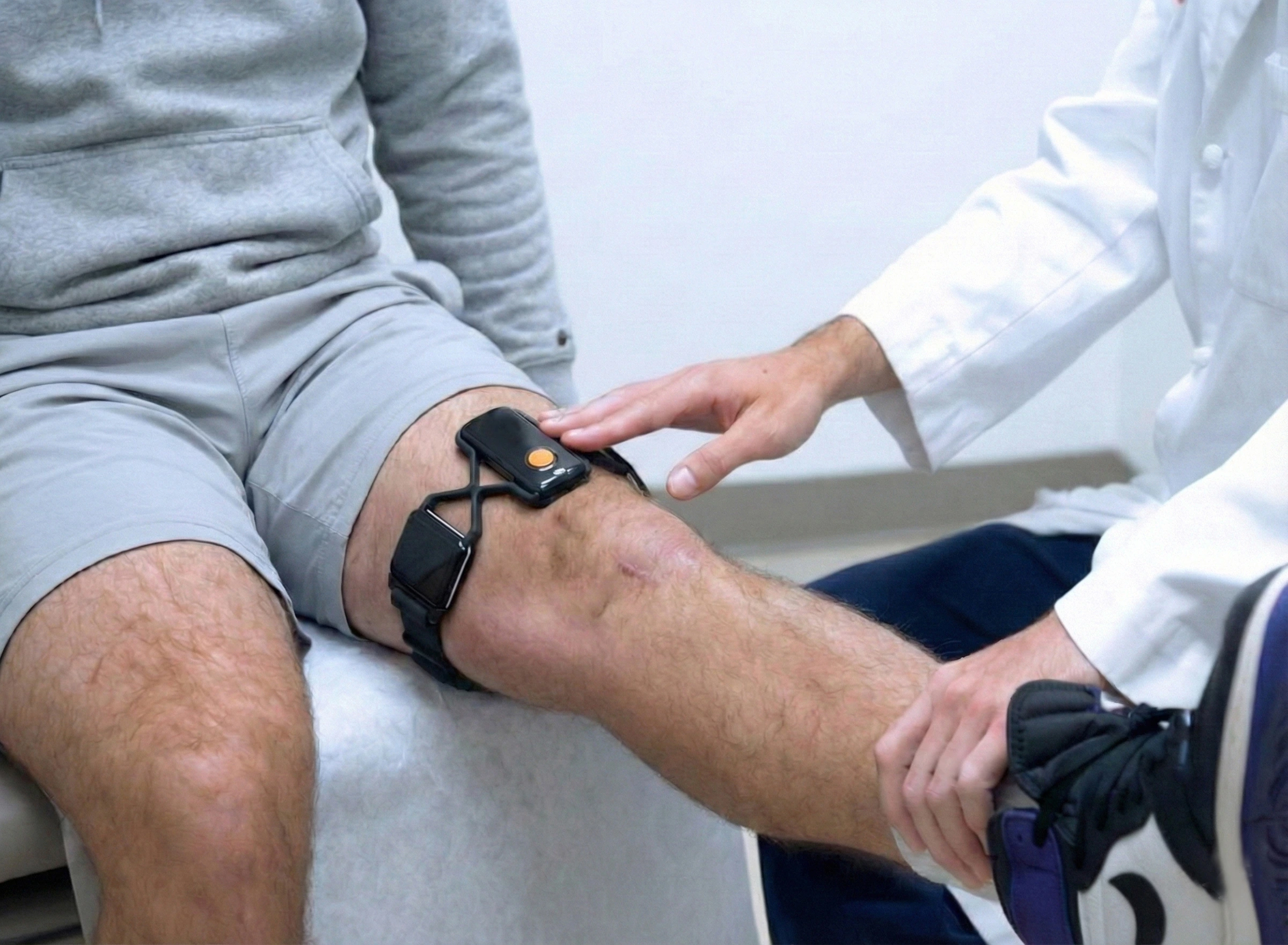

Most musculoskeletal recovery happens outside the clinic. As Remote Therapeutic Monitoring gains traction under 2026 reimbursement changes, the question clinicians are asking is the same one they’ve always asked: what’s actually happening to my patient between appointments?
A patient leaves the hospital after a knee replacement. The surgery went well. They’re sent home with a printed exercise sheet, a follow-up appointment in six weeks, and their surgeon’s best hope that they’ll do as instructed.
What happens between now and that follow-up is, for the most part, invisible. The surgeon won’t know if the patient completed their exercises. They won’t know if pain on day twelve caused the patient to quietly stop moving. They won’t see a compensatory gait pattern forming over three weeks of guesswork. By the time the follow-up appointment arrives, the recovery trajectory may already have drifted and correcting course is far harder than staying on it from the start.
This is the post-discharge blind spot. It isn’t a failure of clinical skill. It’s a structural gap in how musculoskeletal recovery is currently tracked and in 2026, it’s becoming one of the most actively discussed problems in orthopedic and rehabilitation care.
The Recovery Clinicians Don’t See
Surgical technique, implant design, and evidence-based rehab protocols have all advanced considerably over the past two decades. One thing hasn’t changed much: the visibility window clinicians have into how a patient is actually doing.
Recovery from major musculoskeletal procedures is rarely a brief event. Total knee arthroplasty involves meaningful recovery over many months. Rotator cuff repair can extend well beyond that. ACL reconstruction requires sustained rehabilitation over a year or more. During that stretch, patients typically see a physical therapist a few times a week at most and receive no direct clinical observation for the rest of it.
That gap accounts for the large majority of the total recovery period. It’s also where the most important decisions about whether a patient is on track, or quietly falling behind, would ideally be made.
Five Questions Clinicians Still Can’t Reliably Answer
The information gap created by the post-discharge blind spot shows up as a set of clinical questions that remain stubbornly difficult to answer with confidence, not edge cases, but central to how rehabilitation decisions get made.
- How can clinicians know whether a patient is actually following their prescribed rehabilitation protocol at home, rather than relying on what the patient reports at the next visit?
- Why do some patients recover faster than expected while others, on the same protocol, fall behind and how would a clinician know which pattern is happening in real time?
- How much confidence can a clinician reasonably have in a treatment decision made between scheduled follow-up visits, when the data informing it is six weeks old?
- What meaningful recovery events, a pain flare, a missed week of exercises, an early compensation pattern, happen outside the clinic that the care team simply never sees?
- Can a recovery delay be identified early enough to intervene, or does it only become visible once it has already become a longer-term complication?
Why Self-Reporting Doesn’t Close the Gap
The default tool for understanding what happens between visits is the patient themselves outcome questionnaires, pain scales, and a conversation at the follow-up appointment. These are useful, but they were never designed to capture six weeks of daily variation.
Research on patient recall: most of it from pain assessment literature, points to a real but modest effect: people’s memory of how they felt over a period tends to be disproportionately shaped by the most intense moments and the most recent ones, rather than an even average of the whole stretch. The effect isn’t large enough to call self-reporting unreliable, but it’s a reminder that what a patient describes at a follow-up visit is a reconstruction, filtered through memory, not a continuous record of what actually happened.
Self-reporting also can’t capture what a patient doesn’t notice in the first place. Subtle changes in movement quality, early signs of muscle compensation, or a gradual decline in activation are often invisible to the patient, especially early in recovery when proprioception itself may be compromised. These are also frequently the signals that matter most for catching a problem early.
An illustrative pattern, total knee arthroplasty, week 2 to week 6
This is a hypothetical, but a familiar shape of one: a patient is discharged with a home exercise program. At the two-week PT check-in, range of motion looks roughly on track and the patient reports things are “going fine.” What isn’t visible: the patient has quietly scaled back quadriceps sets because of discomfort. By week four, a mild flexion contracture has begun to form. The six-week follow-up reveals a deficit that now requires additional weeks of targeted therapy to recover.
The moment that might have mattered, a protocol check-in somewhere around day ten never happened, not because anyone failed to do their job, but because nothing in the current system would have flagged it.
Why This Conversation Is Happening Now
Remote Therapeutic Monitoring has existed as a Medicare billing category since 2022, but 2026 marks a meaningful shift. In its CY 2026 Physician Fee Schedule Final Rule, CMS added two new CPT codes for musculoskeletal RTM, 98985 and 98979, specifically designed to lower the eligibility threshold. Previously, qualifying for RTM reimbursement required at least 16 days of data collection and 20 minutes of provider management time per month; the new codes recognize shorter monitoring periods (as few as 2–15 days) and shorter management windows (10–19 minutes), making RTM workable for a wider range of patients and practice types.
Why RTM matters to this conversation
RTM reimbursement changes don’t solve the post-discharge blind spot by themselves but they do something important: they create a financial and structural incentive for clinics to actually invest in closing it. CMS has classified RTM codes under its New Technology List, with the framework set to remain in effect through at least 2030. For the first time, monitoring patients between visits is something payers are willing to support, not just something clinicians wish they had time for.
For orthopedic surgeons and PTs evaluating where this fits into their practice, the more useful question isn’t “should we adopt RTM” in the abstract, it’s which of the five questions above their current workflow still can’t answer, and whether that gap is costing them in outcomes, follow-up burden, or patient experience.
What We’re Seeing in Early Pilots
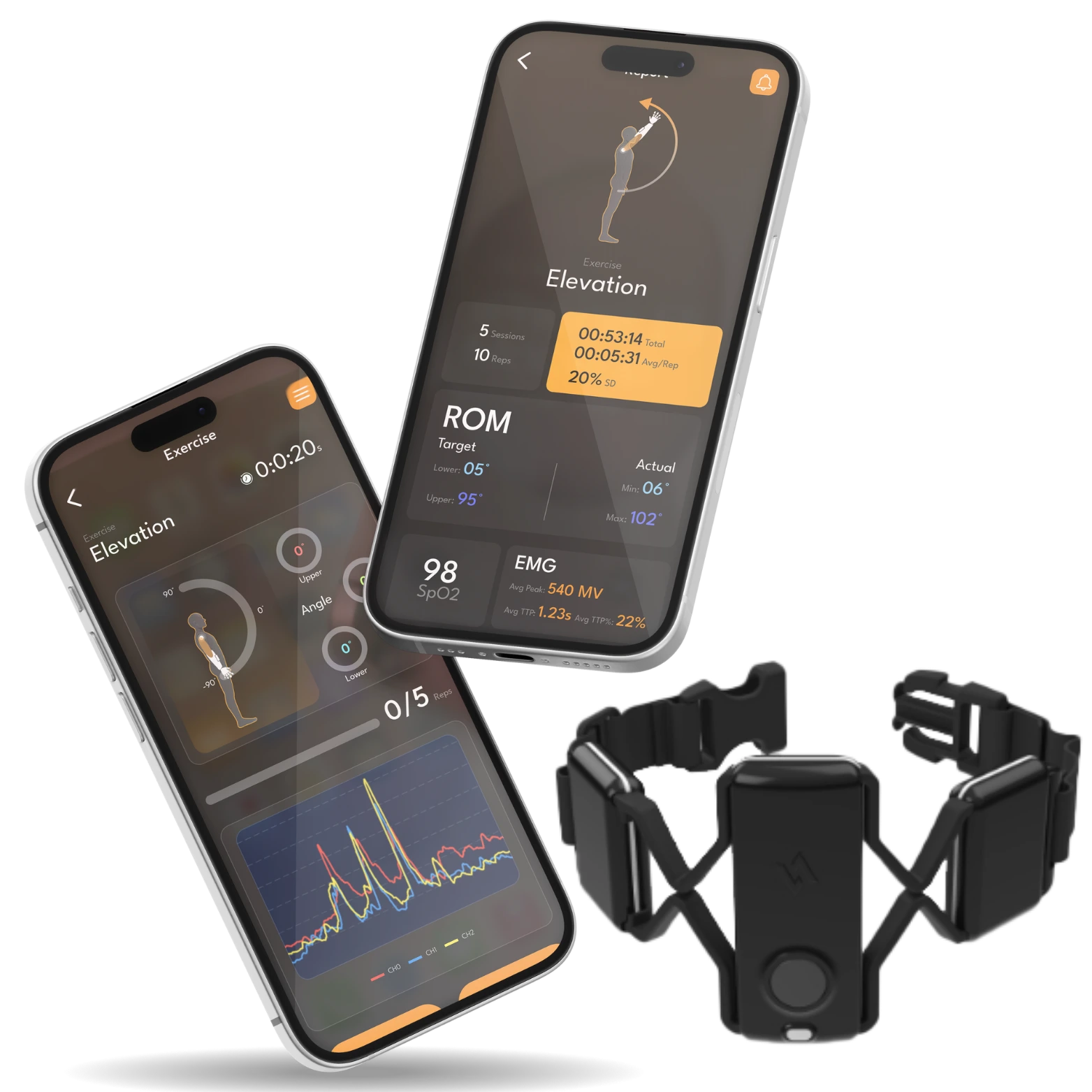
This is a problem Vulcan has been studying closely through the development of the Vulcan MSK Sensor System, a wearable sensor and companion analytics platform designed to give clinicians objective visibility into recovery, including the periods between scheduled visits.
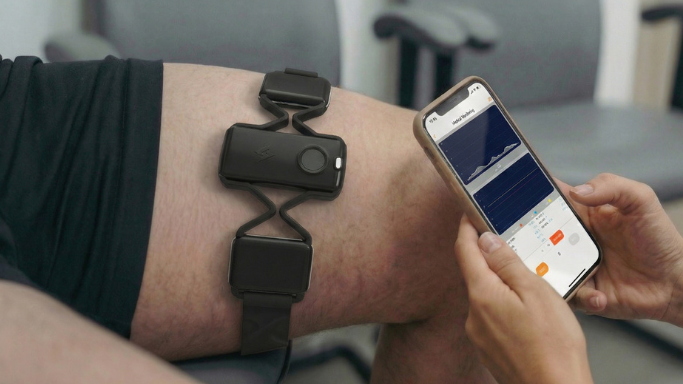
The system combines a wearable sensor band with a clinician-facing analytics platform, capturing muscle activity, motion, and effort to give a more continuous picture of recovery than periodic in-clinic assessment alone allows.
The system combines a wearable sensor band with a clinician-facing analytics platform, capturing muscle activity, motion, and effort to give a more continuous picture of recovery than periodic in-clinic assessment alone allows.
Remote monitoring of vitals and daily activity for stroke and elderly patients, evaluating adherence and comfort outside the clinic.
These pilots are early, but they reflect the same underlying premise this article has focused on: recovery that happens outside the clinic shouldn’t also be invisible to the clinic.
The post-discharge blind spot isn’t an unsolvable feature of musculoskeletal care, it’s an information problem. And it’s one the industry, helped along by changing reimbursement incentives, is finally starting to take seriously.
Learn how the wearable sensor and analytics platform are being piloted across hospital, home-care, and clinical practice settings.