
Range of motion is the most common metric in orthopedic rehabilitation. It’s also one of the most incomplete. Two patients can reach identical ROM targets and be at very different points in their recovery.
A patient reaches 120 degrees of knee flexion at their six-week follow-up after total knee replacement. On paper, they’ve hit their target. Their surgeon marks the milestone. Their physical therapist moves the protocol forward. Then, three months later, the patient returns, still struggling with stairs, still avoiding certain movements, still not back to the activities they expected to resume.
This isn’t an unusual story. And the disconnect at the center of it, between what range of motion tells clinicians and what’s actually happening in the patient’s recovery, is one of the more consequential limitations in how musculoskeletal outcomes are currently measured.
What Range of Motion Actually Measures
ROM assessment does one thing well: it tells you the angular range through which a joint can move. That’s a meaningful clinical data point. After surgery or injury, restricted joint movement is a clear indicator that something needs attention, and restoring motion is a legitimate early-stage rehabilitation goal.
The problem isn’t that ROM is a bad measure. The problem is that ROM is frequently treated as a proxy for functional recovery — as though achieving a target angle is equivalent to recovering function. Research on orthopedic outcomes increasingly shows that these are not the same thing.
Multiple studies across total knee replacement, ACL reconstruction, and rotator cuff rehabilitation have shown that muscle strength, neuromuscular activation, and movement quality are often stronger predictors of long-term function than ROM alone. (Mizner et al., Palmieri-Smith et al., Logerstedt et al.)
What ROM tells you
✓ Whether the joint can move through a target angular range
✓ Whether there is gross restriction requiring intervention
✓ Whether a specific anatomical milestone has been reached
✓ Whether the patient can comply with a simple movement instruction
What ROM doesn’t tell you
- Whether the muscles controlling that joint are activating appropriately
- Whether the movement is being performed with normal quality and symmetry
- Whether the patient is compensating with adjacent structures
- Whether tissue healing and physiological recovery are progressing
- Whether the patient can sustain that movement under real-world load and fatigue
The Muscle Activation Gap
One of the most important limitations of ROM assessment is that it measures movement, but not the neuromuscular activity producing that movement. A patient may demonstrate adequate joint mobility while the muscles responsible for controlling that joint remain inhibited, weak, or poorly coordinated, a phenomenon well documented following orthopedic surgery.
After total knee replacement, for example, patients often regain acceptable knee flexion before quadriceps activation fully recovers. Although ROM targets may be achieved, persistent quadriceps deficits can remain for months and are associated with poorer stair negotiation, reduced walking performance, and lower patient-reported function.
This illustrates a broader principle: joint mobility and functional recovery do not always progress at the same rate.
What the Research Shows
Studies on TKR recovery have found that quadriceps strength deficits can persist well beyond the point at which ROM targets are reached — and that these deficits, rather than ROM, are more predictive of patient-reported functional outcomes and return to daily activity. Research on ACL reconstruction has produced similar findings: athletes who meet ROM and basic strength thresholds at return-to-sport clearance still show altered muscle activation patterns and movement asymmetries that increase re-injury risk.
The clinical implication is not that ROM is irrelevant — it’s that ROM alone, used as a proxy for functional readiness, misclassifies patients in both directions. Some patients with restricted ROM are functionally more capable than their numbers suggest. Others who hit ROM targets are far from ready for the demands they’ll face.
Movement Quality: What Angle Measurements Miss
Beyond muscle activation, ROM measurements are blind to how a movement is being performed. Two patients can achieve the same joint angle through very different movement strategies, one recruiting the correct muscle groups in a coordinated pattern, one compensating through adjacent structures in a way that distributes load inefficiently and may create new problems over time.
Compensation patterns are particularly common in post-surgical patients. They often develop gradually and quietly, the patient finds a way to accomplish the assessed movement that satisfies the clinical benchmark while avoiding the tissue or muscle group that is not yet ready to bear full load. The ROM number looks fine. The movement quality does not.
An illustrative pattern — rotator cuff repair, weeks 8 to 12
A patient recovering from rotator cuff repair demonstrates external rotation ROM within normal limits at their eight-week follow-up. The clinical team advances the protocol. Over the following weeks, the patient continues to compensate with trunk rotation and scapular elevation during overhead tasks, strategies that reduce demand on the healing cuff while allowing the movement to be completed.
These patterns are not visible in ROM assessment. They become visible in gait analysis, video review, or objective movement quality measurement, or they become visible later, when persistent poor movement mechanics contribute to secondary shoulder problems that weren’t present at surgery.
This is an illustrative scenario. It reflects a type of clinical pattern, not a specific case.
Four Dimensions ROM Doesn’t Capture
Functional recovery is multidimensional. ROM captures one of those dimensions. Clinicians making recovery and clearance decisions ideally want to understand all of them, and the gap between what ROM provides and what comprehensive recovery assessment would provide is substantial.
The core problem
Range of motion is a necessary but insufficient indicator of recovery. It answers one question — can the joint move through this range? — while leaving the questions that most directly predict functional outcomes unanswered. When ROM is used as a primary recovery milestone rather than one data point among several, it creates a false ceiling: patients who reach target ROM are classified as recovered when recovery may still be substantially incomplete.
What Comprehensive Recovery Assessment Looks Like
The clinical shift being discussed across orthopedic and rehabilitation medicine is not away from ROM, it’s toward using ROM alongside objective data on muscle activation, movement quality, and physiological markers that together provide a more complete picture.
For clinicians, this has practical implications at several stages of rehabilitation:
Early recovery — weeks 1 to 6
ROM is most useful here. Gross restriction is the primary concern, and ROM targets provide clear early benchmarks. However, monitoring muscle activation alongside ROM from the start identifies patients whose neuromuscular recovery is lagging behind their joint mobility, a pattern that predicts later functional deficits if not addressed early.
Mid-recovery — weeks 6 to 12
This is where ROM alone becomes most misleading. Patients frequently reach ROM targets while muscle activation and movement quality remain significantly impaired. Protocols advanced based on ROM milestones at this stage can miss the patients who are hitting the numbers but not the function.
Return-to-activity clearance
Return-to-sport, return-to-work, and return-to-daily-activity decisions made on ROM data alone have the highest risk of misclassification. Research across multiple surgical categories has linked clearance decisions based purely on ROM or time-based criteria to elevated re-injury rates and persistent functional limitations.
How Vulcan Approaches This
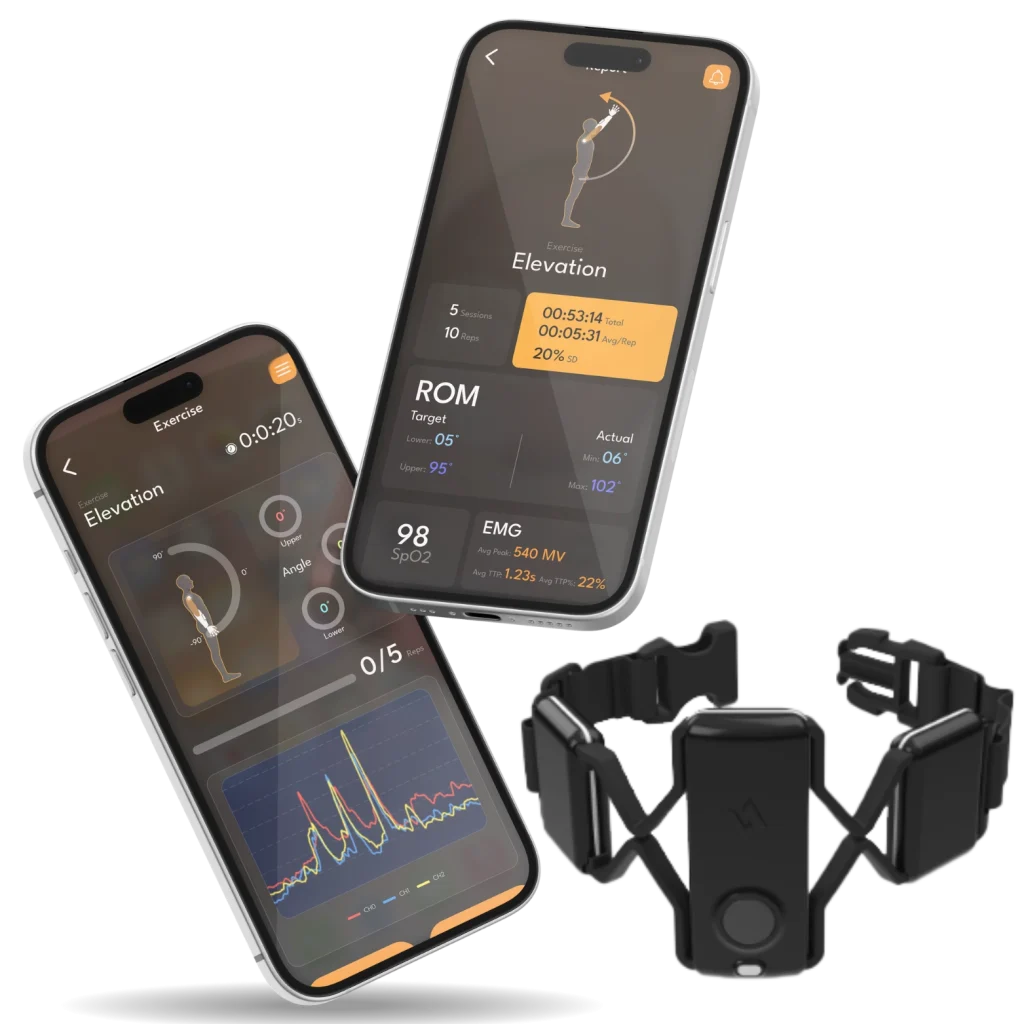
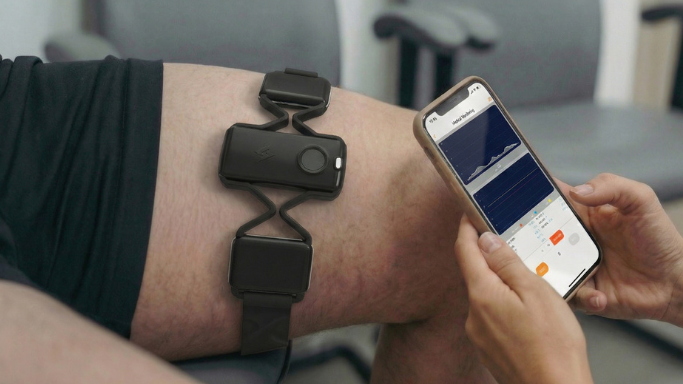
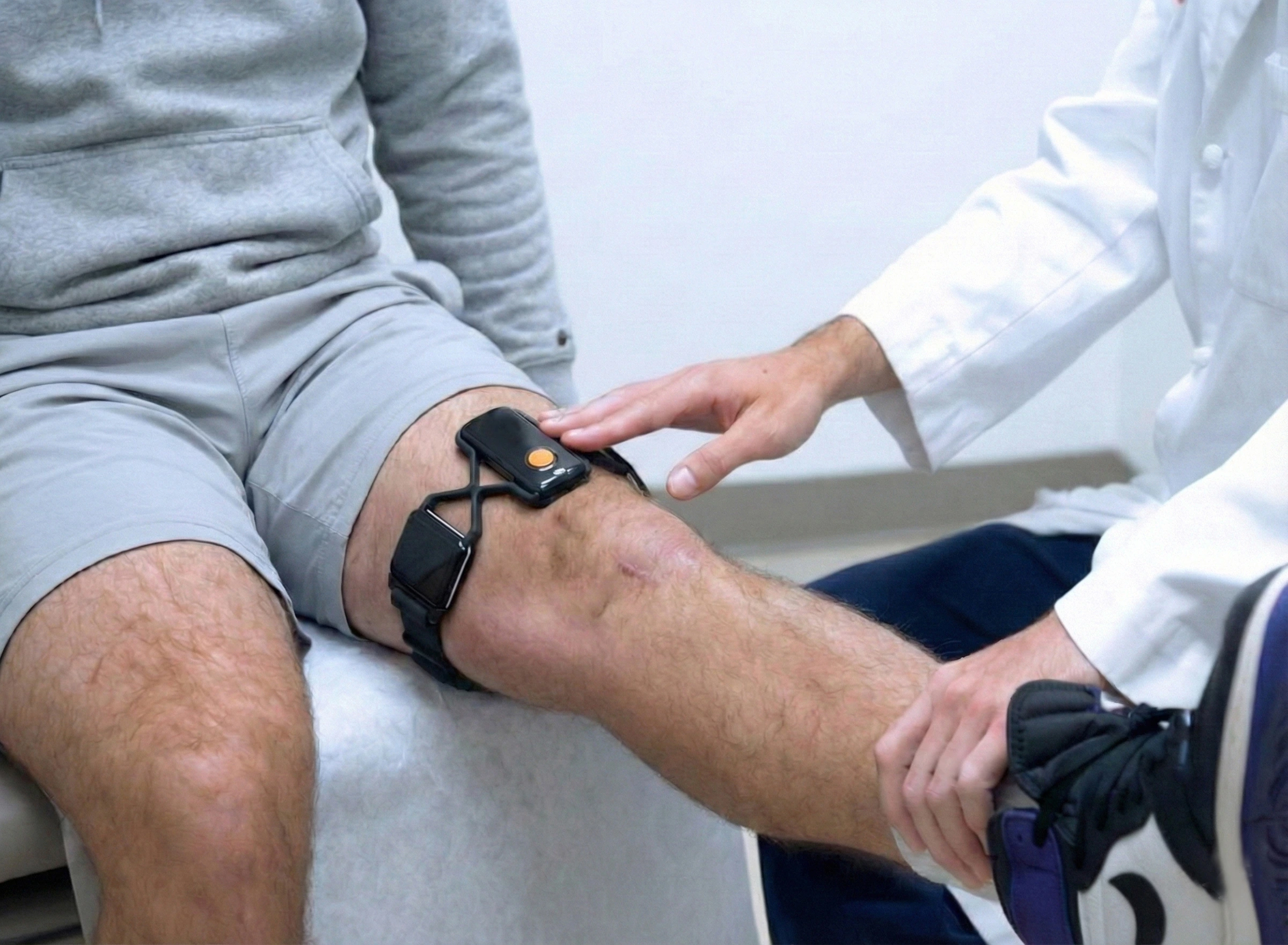
This is the clinical problem the Vulcan MSK Sensor System is designed to address. Rather than replacing ROM assessment, the system is intended to sit alongside it — capturing muscle activity, motion quality, and physiological signals during in-clinic assessment and home rehabilitation to give clinicians a more complete picture of where recovery actually stands.
Currently in clinical pilots
The system supports both in-clinic biomechanical assessment — where a clinician places the wearable sensor and captures objective data during prescribed movements — and remote home monitoring, where the patient performs their rehabilitation protocol at home and clinicians access objective adherence and recovery data through the platform.
Active investigator-initiated studies at orthopedic centers are currently evaluating the system’s clinical utility in Total Knee Replacement recovery and Anterior Cruciate Ligament reconstruction — the two highest-volume musculoskeletal surgical categories where ROM-only assessment limitations are most clinically consequential.
The system is CE Marked and ISO 13485:2016 certified.
The goal isn’t to generate more data for its own sake. It’s to close the specific clinical blind spots that ROM assessment alone cannot address — and to give the clinicians making recovery and clearance decisions a more reliable signal that what they’re seeing in the clinic reflects what’s actually happening in the patient’s recovery.