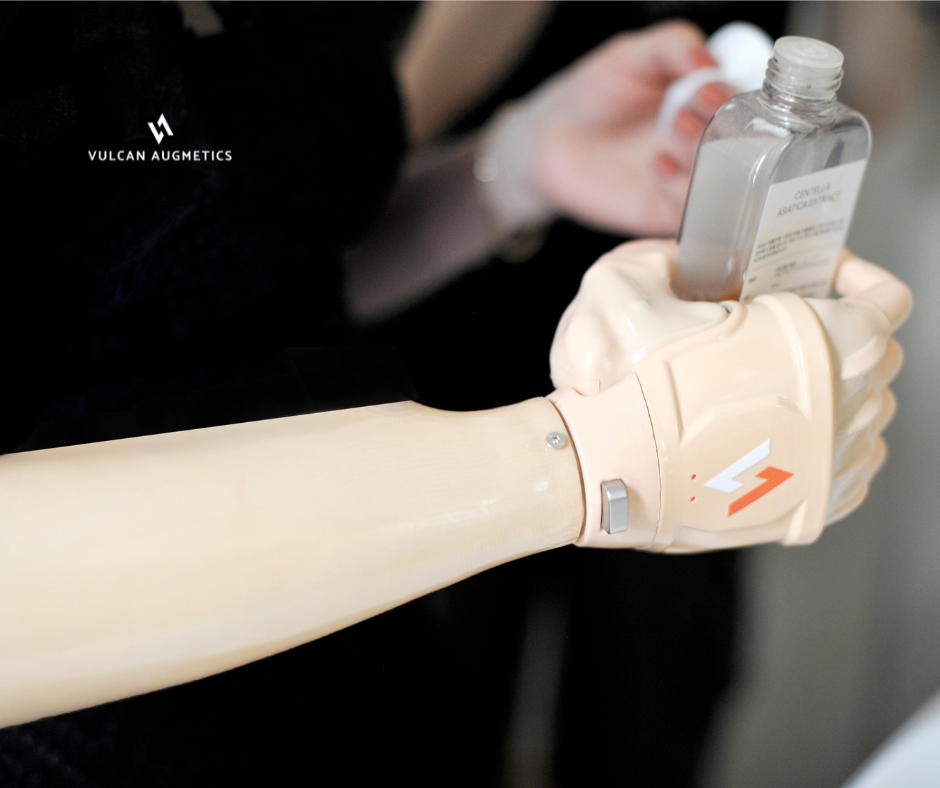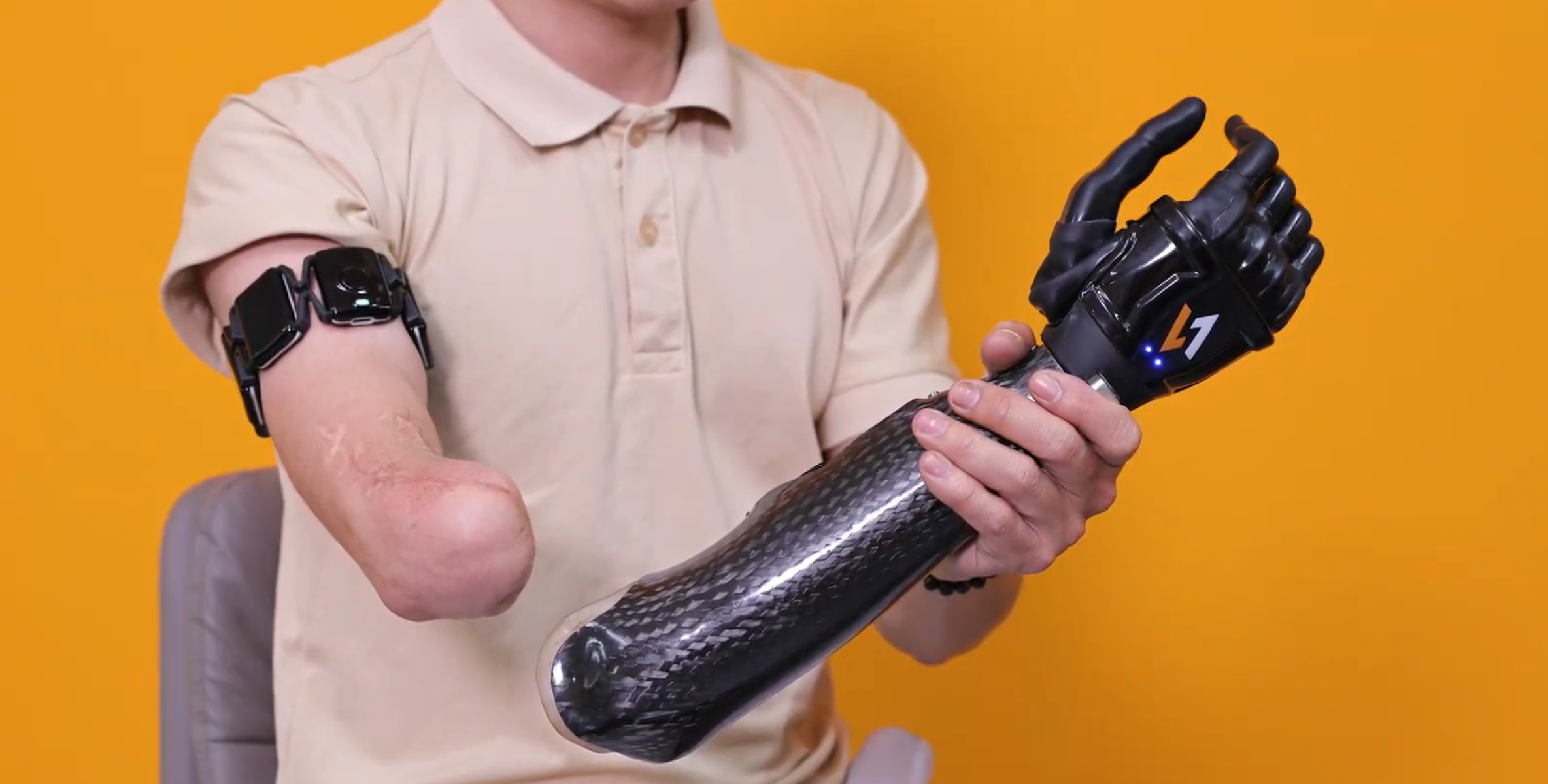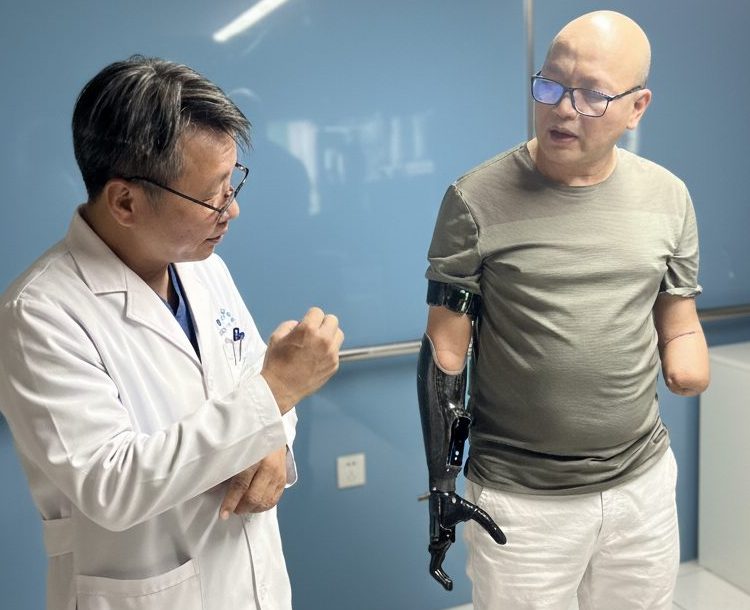

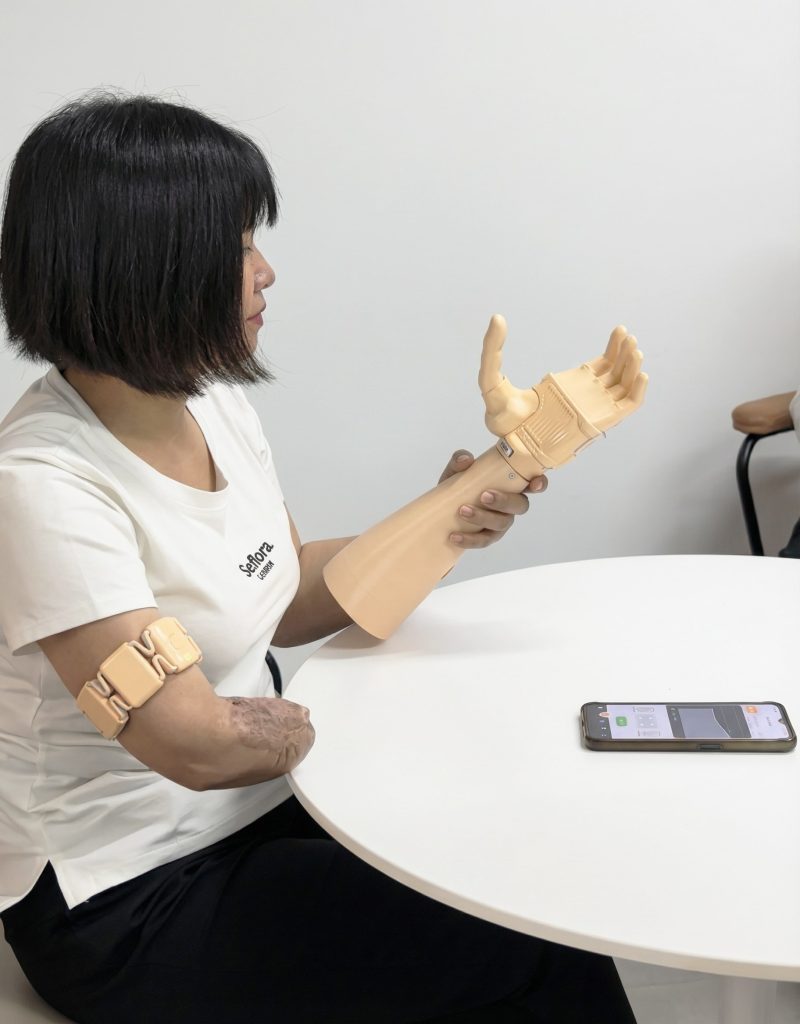
The Vulcan Myoband is a wearable biosignal sensor designed to detect electromyographic (EMG) signals generated when muscles contract. These signals are then used to control a myoelectric or bionic prosthetic hand through Bluetooth Low Energy (BLE).
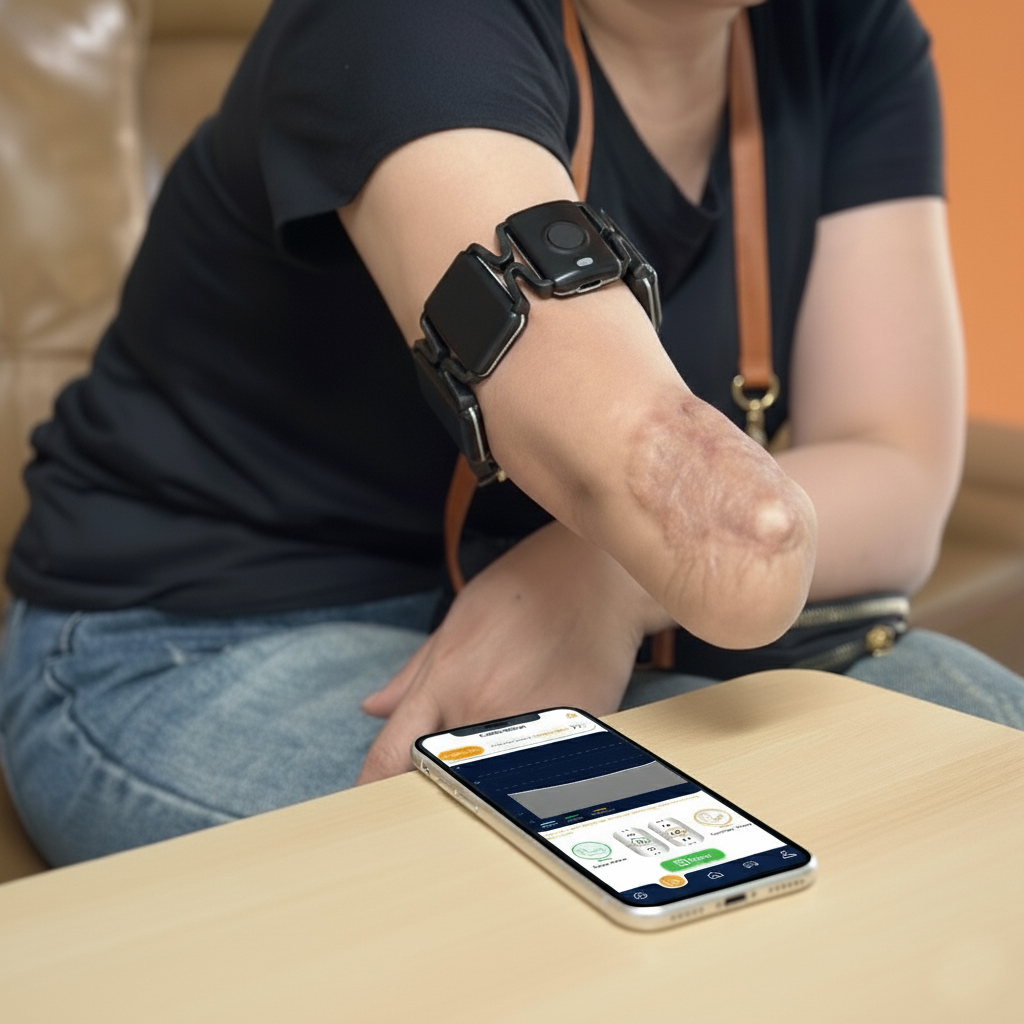
In simple terms, the Myoband acts as the control interface between the patient’s muscles and the prosthetic hand, translating muscle activity into movement. Unlike traditional prosthetic systems that place electrodes inside the socket, the Myoband is worn as a sensor band around the upper arm, typically over the biceps. This design allows the system to capture muscle signals without relying on precise electrode placement within the prosthetic socket.
How Does It Work for Patients?
1. Detecting Muscle Signals
When a patient attempts to move their missing hand, the remaining muscles in the arm still generate EMG signals.
The Myoband uses multiple sensors positioned around the arm to detect muscle activity from different areas. This multi-point sensing approach helps the system capture weak or complex signals that may be difficult to detect with conventional electrode setups.
Watch Video: See How the Vulcan Hand Calibrates in Under 1 Minute!
2. Processing the Biosignals
The Vulcan system is calibrated individually to each patient’s signal. During calibration which typically takes less than one minute, the system analyzes the patient’s EMG signal and calibrates automatically to their individual muscle activity, typically in under a minute.
The Myoband’s built-in system automatically measures and calibrates to each patient’s muscle activity, including patients with weak or variable EMG signals.
3. Translating Signals Into Movement
After calibration, the Vulcan prosthetic hand responds directly to the patient’s muscle activity through BLE communication. In the Vulcan system, the Myoband functions as the signal acquisition and processing unit, while the prosthetic hand acts as the execution device. After muscle activity is detected and translated into control commands, the Myoband sends these commands wirelessly to the prosthetic hand in real time.
Depending on the configuration, the control logic can also be reversed. This wireless control solution removes the need for complex internal wiring inside the prosthetic socket. As a result, clinicians have greater flexibility during socket fabrication, while patients benefit from a lighter system, easier maintenance, and more stable signal transmission during daily movement.
Contact our clinical team today to see if the Vulcan system is right for you. Click Here
How to Wear the Myoband
1. Proper Placement
Place the Myoband around the upper arm or forearm, positioning the sensors over the muscles used for control.
2. Adjusting the Strap
Wrap the adjustable strap around the arm and secure it comfortably. The band should fit snugly but not too tight.
3. Skin Preparation
For optimal signal detection, make sure the skin is clean and dry before wearing the Myoband. Avoid lotions or oils that may affect signal quality.
4. Electrode Preparation
Before use, ensure the electrode surfaces are clean. Wipe them with a dry, lint-free cloth to remove dust or residue that could interfere with signal detection.