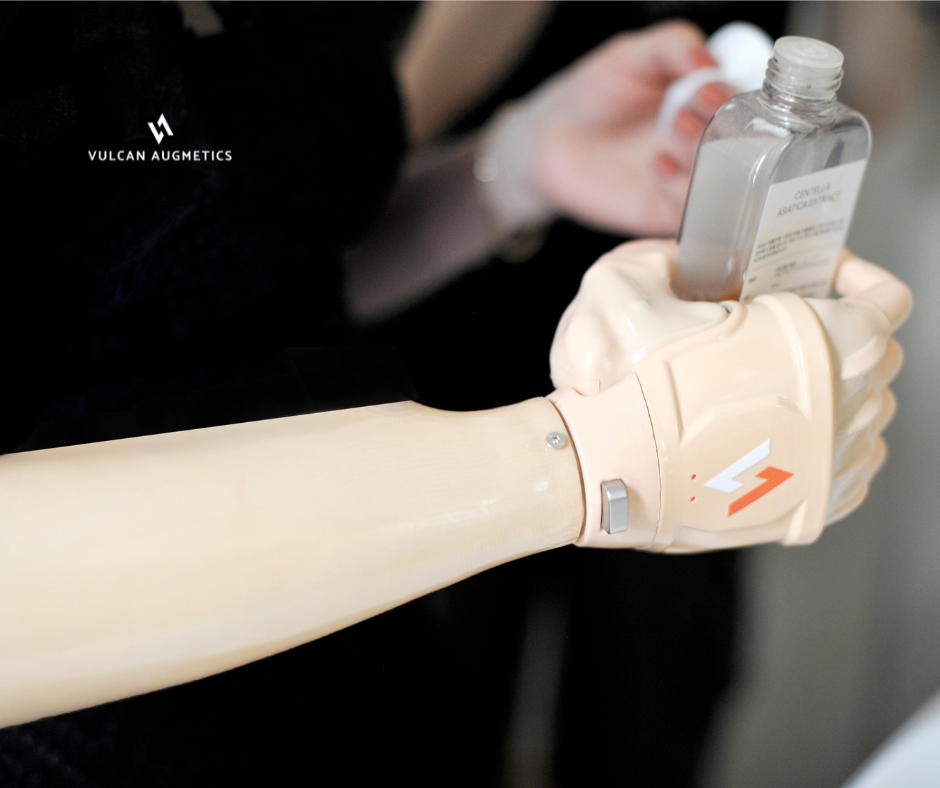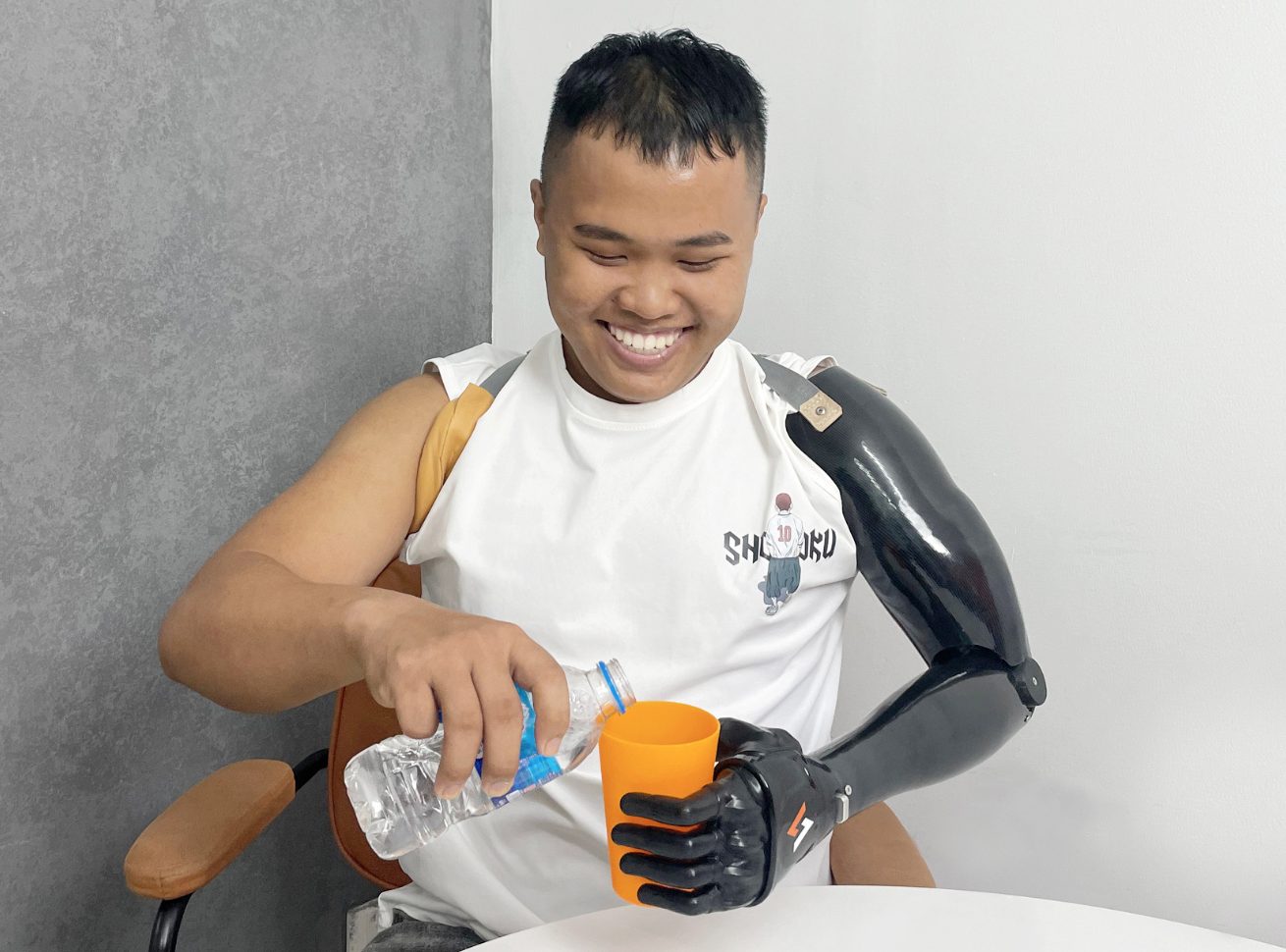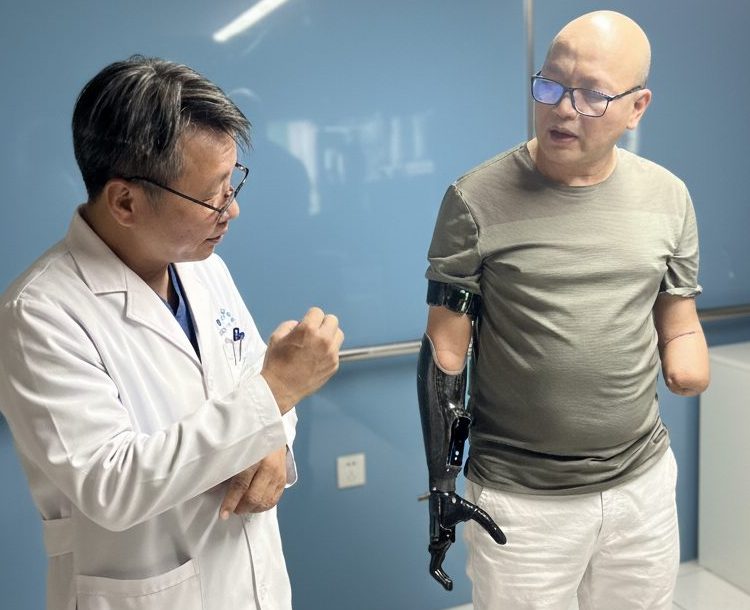

After an upper-limb amputation, receiving a myoelectric prosthetic hand can take one to six months, even after insurance approval or out-of-pocket agreement. The fitting process alone typically requires three to four clinic visits, depending on the complexity of the limb condition and the fabrication workflow.
Yet despite this time and effort, myoelectric fittings still fail in many clinics.
So why does fitting still take so long?
Several factors commonly slow down the process:
- Unstable EMG signals, making it difficult to identify reliable myosites
- Challenging residual limb conditions, such as scar tissue, skin grafts, muscle atrophy, or bilateral amputation
- Repeated trial fittings before confirming whether myoelectric control is viable. Each delay adds friction, not only clinically, but also emotionally and operationally.
The EMG Signal Challenge
Myoelectric prosthetic control relies on electromyographic (EMG) signals, which are generated when residual muscles contract. After an upperlimb amputation, the remaining muscles in the forearm or upper arm can still produce these signals when a patient attempts to move the missing limb.
However, the characteristics of these signals vary widely from patient to patient. The biology of the residual limb and the original surgical procedure play a major role in determining how usable these signals are for prosthetic control.
Several factors influence EMG signal quality, including:
- The cause of amputation (traumatic injury vs. vascular disease)
- The length and shape of the residual limb
- The degree of muscle atrophy
- The number of remaining motor units and sensory neurons
In addition, surgical reconstruction can alter the natural structure of the muscle system. Depending on the procedure, residual muscles may be reattached to bone or tendon, which can change how neuromuscular signals are generated and transmitted.
As a result, EMG signals in an amputated limb often differ from those in an intact limb. They typically show:
- Lower amplitude, due to reduced muscle mass
- Less clear separation between muscle groups, because of altered anatomy
- Signal interference from scar tissue, fat, or soft tissue
- Variability during movement, as limb posture changes
Surface EMG sensors must detect these signals through several biological layers, including muscle tissue, connective tissue, subcutaneous fat, and skin, which further attenuate and filter the electrical activity.
Because of these physiological factors, sensor placement becomes critical. Clinicians must identify the most active muscle regions and optimize electrode placement based on signal amplitude, soft tissue thickness, and stability within the prosthetic socket.
Why Electrode Placement Is So Difficult
Most traditional myoelectric systems requiring electrodes to be placed on two opposing muscle groups. For reliable detection, electrodes must be positioned precisely on the muscle belly and aligned with the direction of the muscle fibers.
During fitting, prosthetists often ask patients to perform repeated muscle contractions while adjusting electrode locations to find signals that are both strong and distinguishable. In practice, this process can involve extensive repositioning and testing, sometimes referred to clinically as “myosite hunting.”
Even when optimal placement is achieved in the clinic, maintaining stable signals in daily life remains challenging. Factors such as electrode displacement, socket pressure changes, sweat, and natural biological changes in the residual limb can all affect signal quality.
Socket Limitations
In conventional prosthetic systems, electrodes are typically embedded inside the socket, which creates additional constraints.
Socket design must balance structural strength, comfort, and space for electronic components. At the same time, electrode locations become fixed once the socket is fabricated. However, residual limb volume can fluctuate throughout the day, and small shifts in socket position during daily movement can alter electrode alignment.
When signal quality changes, patients may require re-adjustments or even a new socket, extending the fitting timeline and sometimes leading to frustration or abandonment of the prosthesis.
The Result: A Trial-and-Error Process
Because EMG signals vary between individuals and depend heavily on precise electrode placement, the fitting process often becomes iterative and time-consuming. Multiple adjustments, test fittings, and recalibrations may be needed before achieving stable control.
For patients eager to regain independence, these delays can be discouraging. For clinicians, they represent one of the most persistent challenges in modern myoelectric prosthetic care.
How the Vulcan Myoband Addresses Common EMG Signal Detection Challenges
Reliable EMG signal detection remains one of the most common challenges in myoelectric prosthetic control. In clinical practice, obtaining stable signals can be difficult, especially for patients with complex residual limb conditions.
Supporting Patients With Weak or Complex EMG Signals
The challenge: Many patients struggle to produce strong, clearly separated EMG signals due to factors such as:
- Weak muscle activity
- Short residual limbs
- Difficulty isolating individual muscle contractions
- Muscle bellies that are difficult to identify
The Vulcan Solution: Instead of requiring strong or highly isolated contractions, the Myoband detects subtle increases in muscle activation above the resting state to establish basic open-close control of the prosthetic hand, based on a threshold recognition technology.
As a result, patients may experience:
- Reduced effort during prosthetic control
- Less muscle fatigue during daily activities
- Improved accessibility for individuals with challenging limb conditions
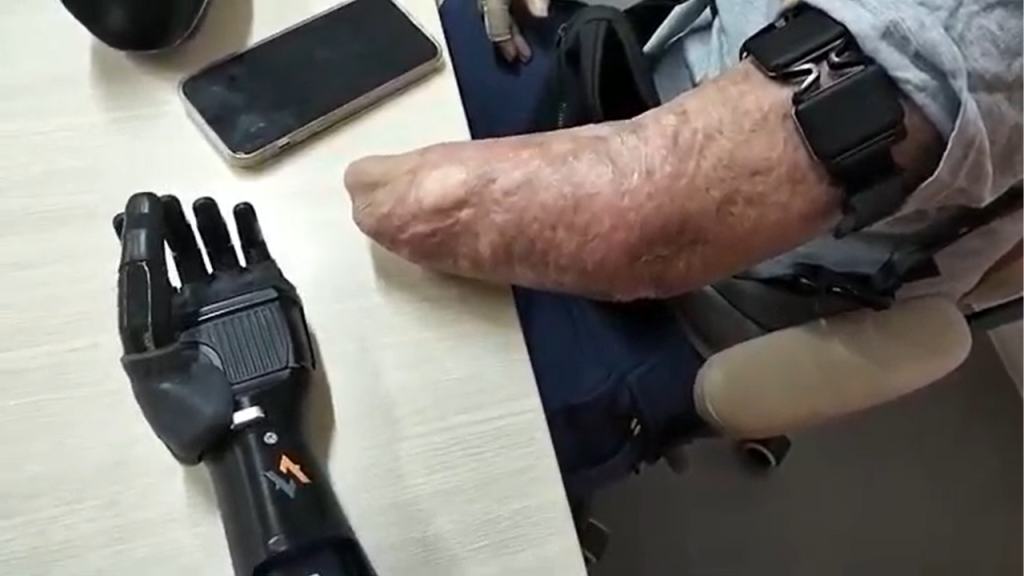
Scar tissue, thick subcutaneous fat, or skin grafts, common in burn or trauma patients, can weaken EMG signals, making it difficult to identify two reliable muscle sites for traditional dual-electrode control on the residual limb.
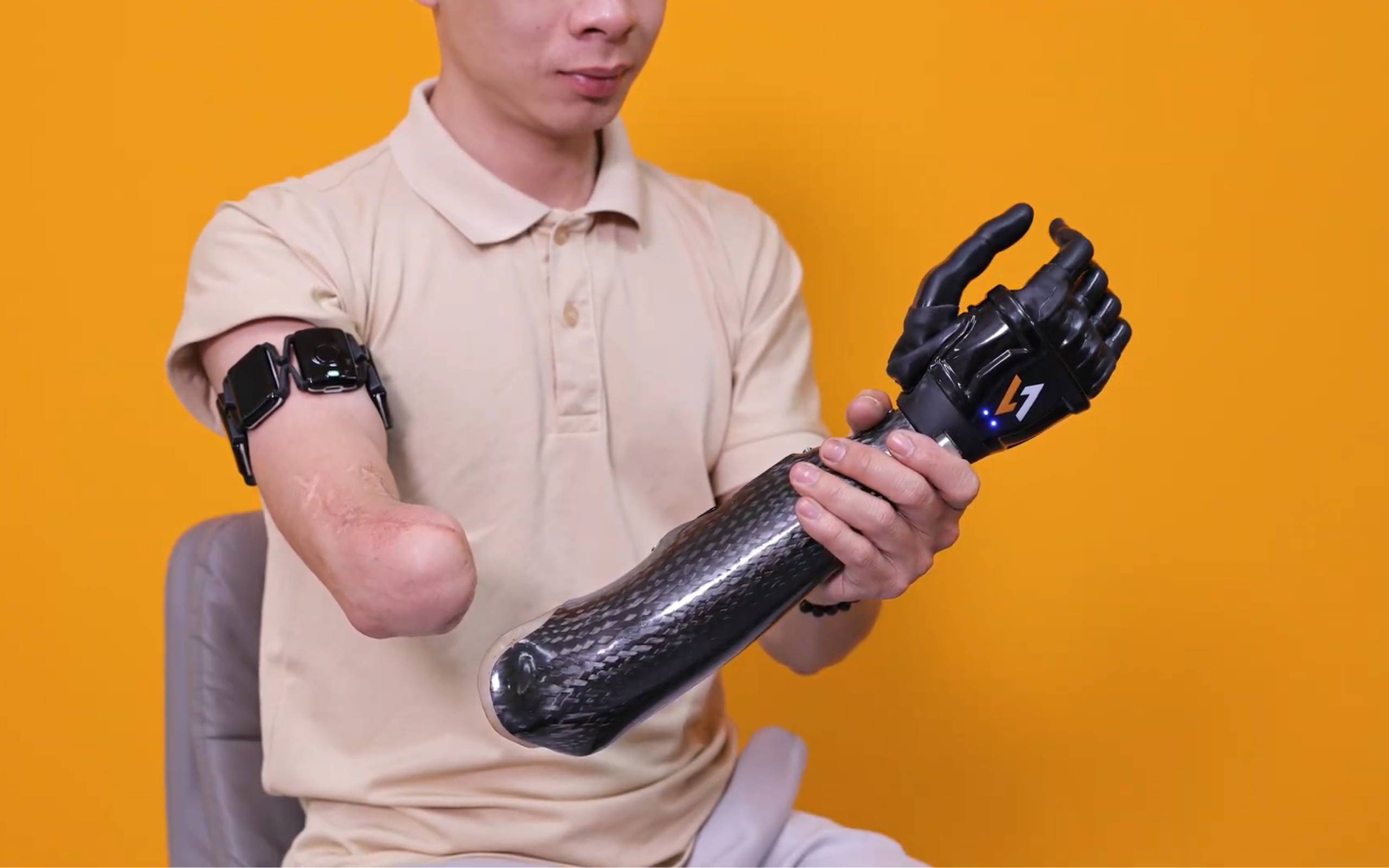
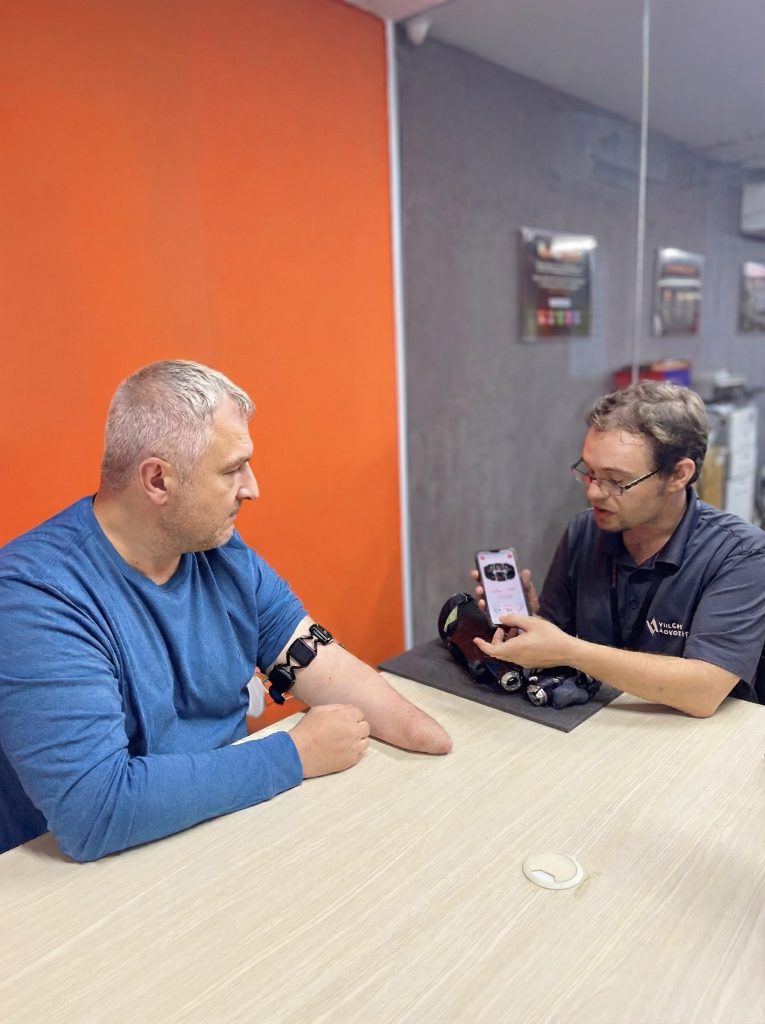
The Myoband overcomes this by being worn around the upper arm and using multiple sensors to capture overall muscle activation across a wider area. Even if one region produces weaker muscle signals due to scarring or reduced sensitivity, the system can still detect activity from surrounding healthy muscle tissue.
Reduced Dependence on Precise Electrode Placement
The Challenge: Traditional myoelectric systems often require precise electrode placement over specific muscle sites. Small positional changes can significantly affect signal quality.
The Vulcan Solution: The Myoband reduces this dependency through multi-channel EMG sensing distributed around the upper arm, capturing signals from several muscle regions simultaneously. This design offers several practical advantages:
- Improved signal detection from multiple muscle areas
- Reduced risk of signal loss if one location is suboptimal
- Less reliance on exact anatomical positioning
- Greater tolerance to minor shifts in sensor placement
For clinicians, this can significantly simplify the fitting process and reduce setup time.
Stability During Daily Movement
The Challenge: During everyday activities, prosthetic sockets may shift slightly on the residual limb, a phenomenon known as pistoning. When electrodes are embedded inside the socket, this movement can disrupt signal detection.
The Vulcan Solution: Because the Myoband is worn directly on the arm, the sensors maintain more stable contact with the skin.
The Myoband also integrates an IMU (Inertial Measurement Unit) that detects arm position and orientation. This helps distinguish between intentional muscle activation and postural contractions. For example:
- When the arm remains stable and EMG activity rises above the activation threshold, the system interprets this as a deliberate control signal
- when the arm is raised and EMG activity increases slightly, the system recognizes this as postural stabilization rather than an intentional command
The system is also designed to handle environmental factors such as sweat and changes in skin impedance, using adaptive algorithms that maintain stable activation thresholds and reduce unintended hand movements.