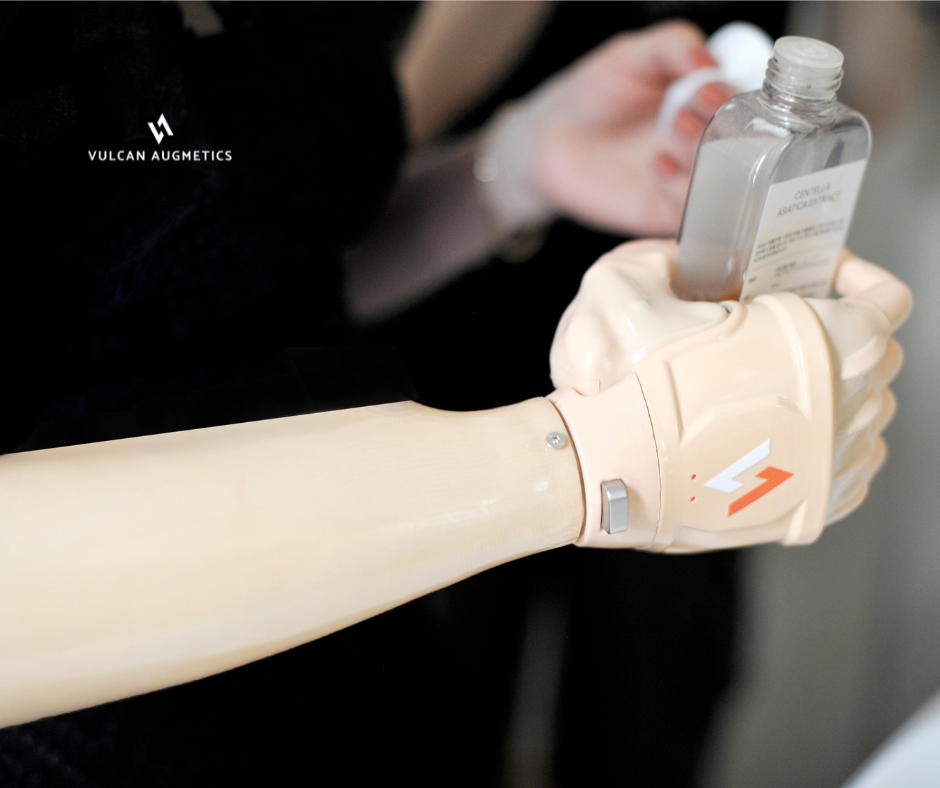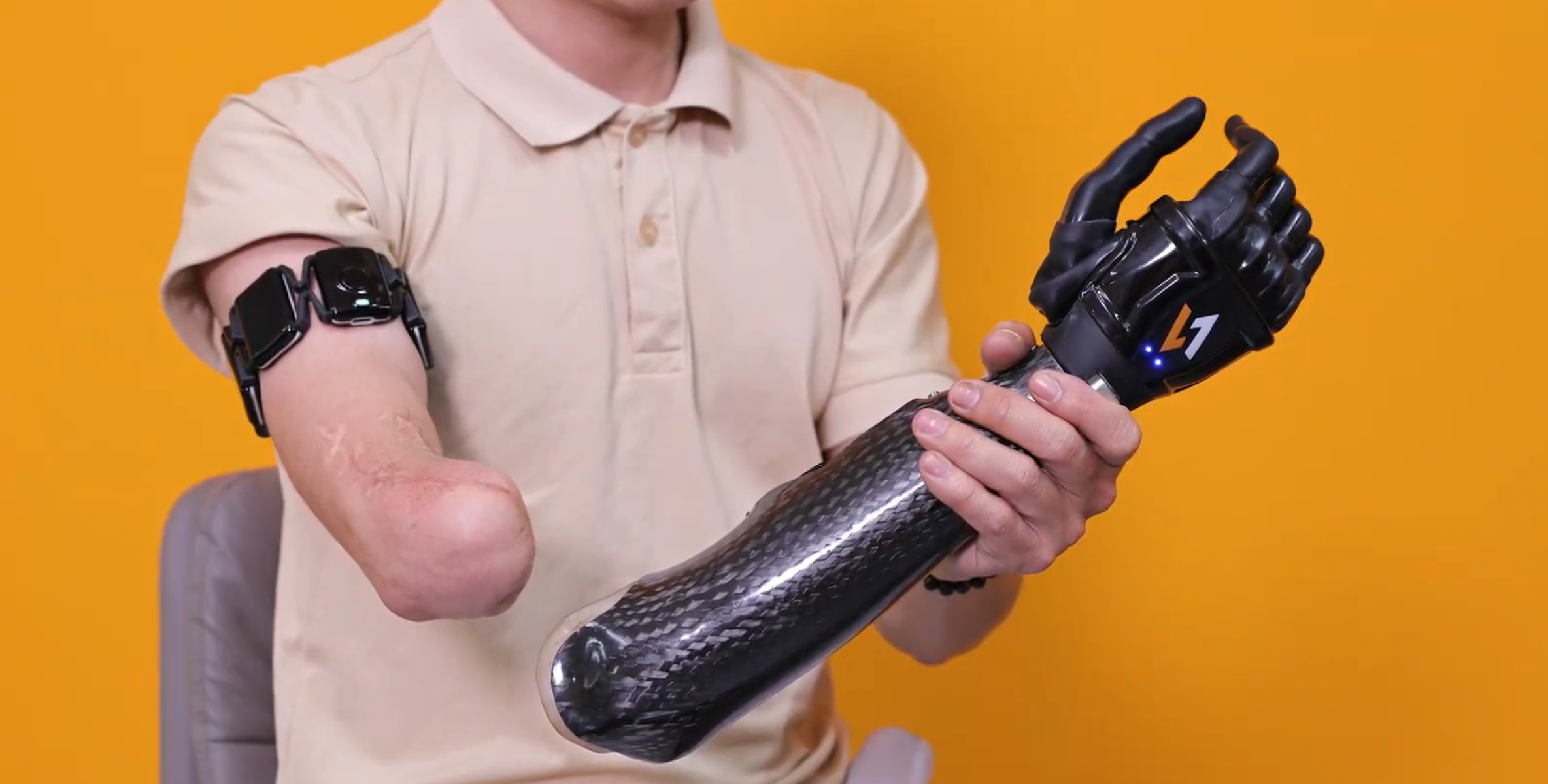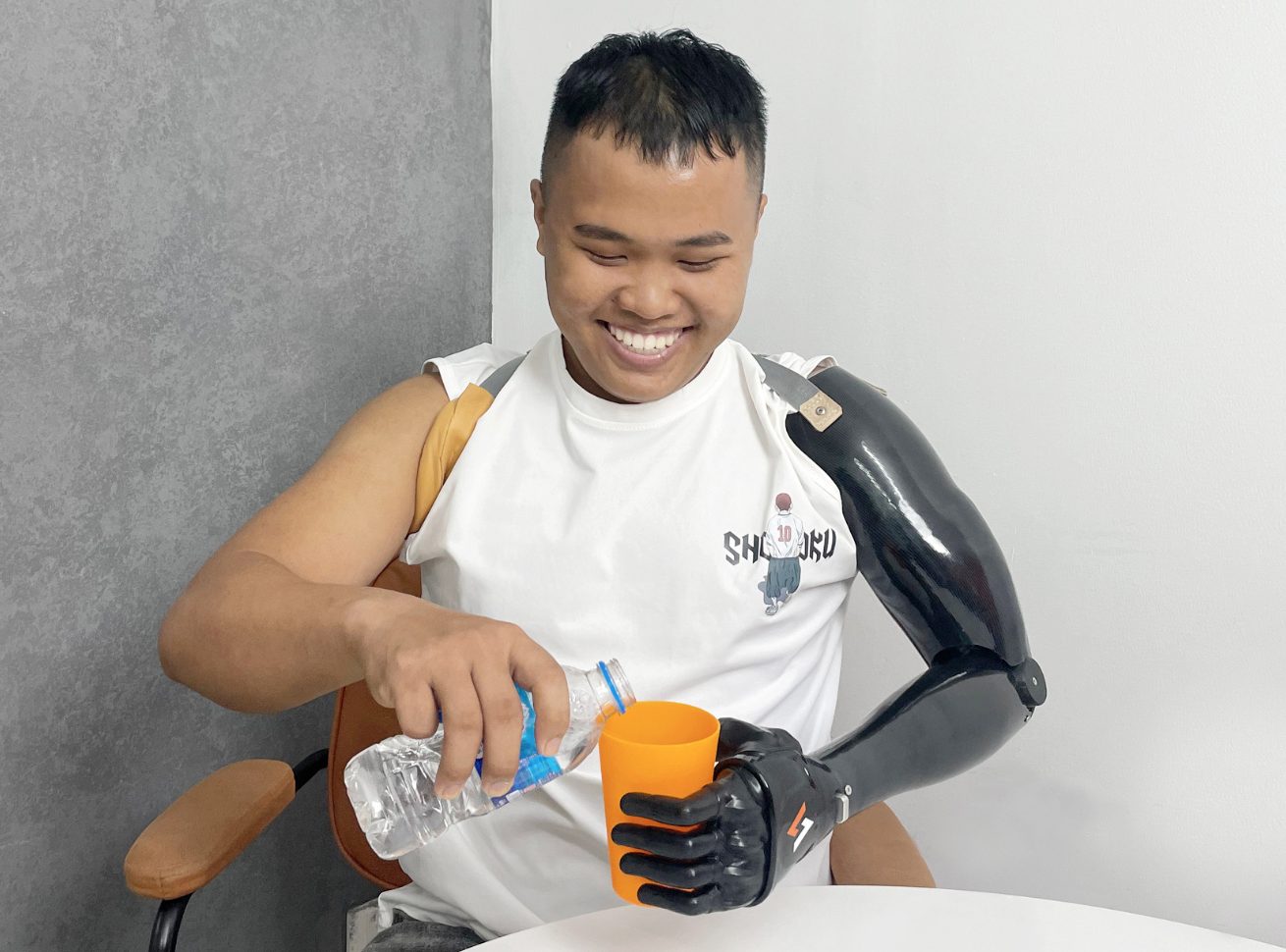

A primary consideration in upper-limb rehabilitation is determining a patient’s suitability for a myoelectric prosthesis. Traditionally, successful myoelectric control requires a residual limb with specific characteristics, particularly strong and isolated electromyographic (EMG) signals.
The Vulcan Myoband provides an alternative approach to myoelectric control. By utilizing a flexible, wireless Vulcan Myoband instead of standard rigid socket electrodes, the system is designed to accommodate a broader range of anatomical conditions and signal presentations.
The Vulcan system is applicable for multiple upper-limb amputation levels. It is currently indicated for patients undergoing rehabilitation for:
- Transhumeral (Above-elbow amputations)
- Elbow disarticulation
- Transradial (Below-elbow amputations)
- Wrist disarticulation
Clinical Note: The Vulcan Myoband and prosthetic hand system are not currently indicated for partial hand or individual finger amputations.
Residual Limb and EMG Signal Considerations
In patients with complex residual limb conditions, identifying stable signal locations can be difficult and may require repeated calibration.
Myoband addresses this challenge through high-sensitivity EMG sensors distributed around the forearm, as well as a smart algorithm developed by Vulcan, allowing the system to capture muscle activity from several channels simultaneously and reliably.
This approach can improve signal detection reliability in patients with less predictable signal patterns, allowing it to adapt to various anatomical presentations where traditional single-site electrodes often fail.
1. Scar Tissue and Skin Grafts
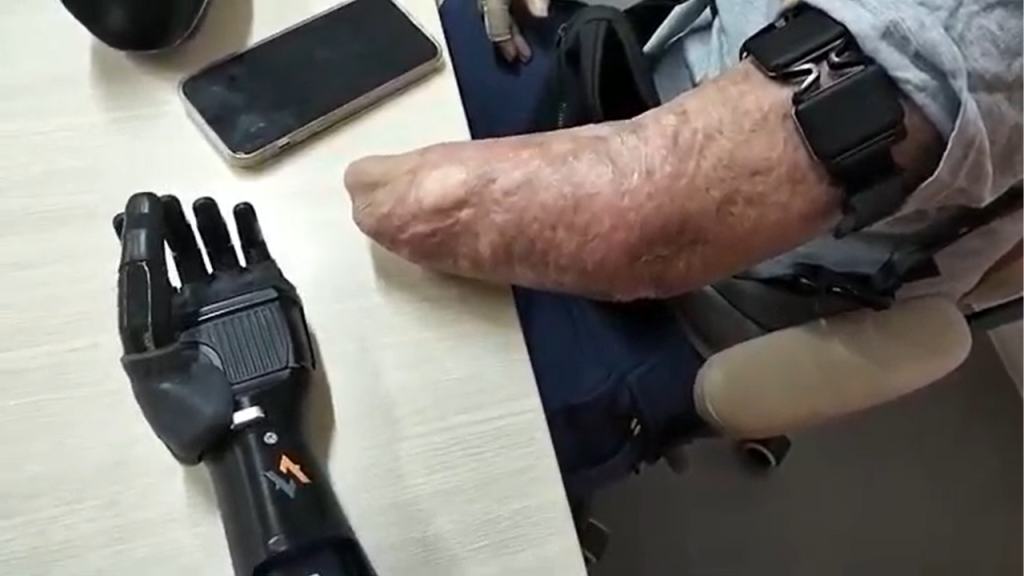
Scar tissue typically exhibits high electrical resistance, which can attenuate EMG signals and impede detection by standard single-point sensors.
The Vulcan Control Solution: If localized scar tissue causes signal attenuation at one site, the algorithm relies on data acquired from adjacent sensors to capture the overall muscle activation pattern.
2. Bone Overgrowth and Irregular Contours
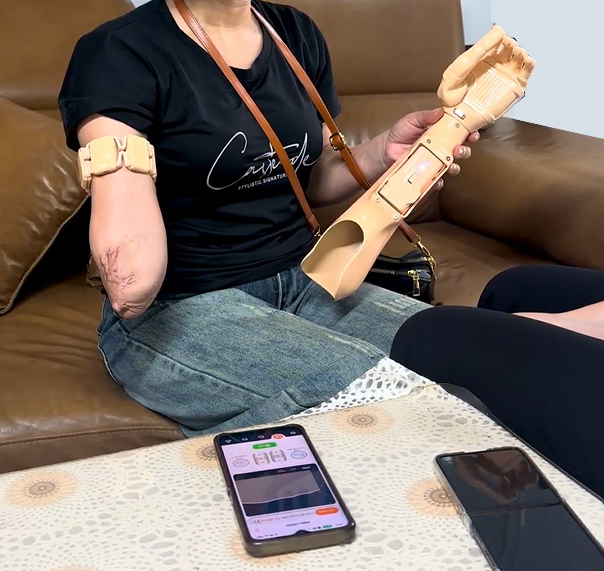
Rigid electrodes require flat, continuous contact with the skin. Irregular stump shapes or bony protrusions can cause pressure points, discomfort, and inconsistent sensor contact (motion artifacts).
The Vulcan Control Solution: Vulcan Myoband uses a flexible, modular elastic structure. This design allows the sensors to conform to the limb’s natural contours, maintaining contact without applying localized pressure on prominent bones.
3. Bilateral Amputations
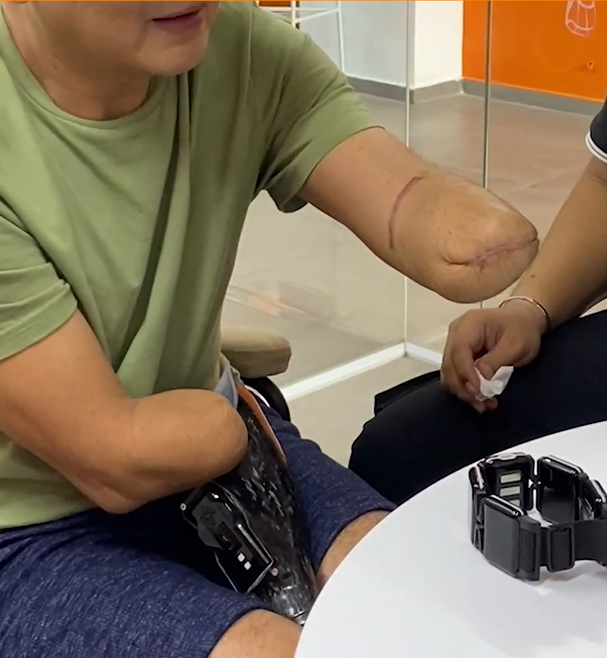
Clinical Case 3 – Bilateral Amputations [ Watch the video here]
Extreme difficulty for the patient to don/doff devices and perform daily calibrations independently.
The Vulcan Solution: The band design allows patients to slide the device on using their other stump. Software profiles are saved per limb, making synchronized bilateral control intuitive.
4. Osseointegration
Requires a system that doesn’t interfere with the percutaneous implant site while maintaining high-fidelity control.
The Vulcan Solution: Since the bone is fixed, muscle movement is more predictable. Myoband captures these stable muscle contractions non-invasively, providing a high-speed interface that matches the direct-to-bone stability.
For clinicians and orthotists, utilizing Vulcan Myoband approach simplifies the socket fabrication process by removing embedded wiring. Functionally, it provides a viable control option for patients whose signal patterns or anatomical features previously excluded them from using standard myoelectric systems.
For more information regarding system specifications, user manuals, or to view additional case studies demonstrating the Vulcan Myoband in various clinical scenarios, please visit our resource center. Click here