
Accurate muscle signal assessment sits at the heart of upper-limb prosthetic care. From the very first myoelectric evaluation through to electrode placement, socket fitting, calibration, and long-term rehabilitation follow-up, clinicians depend on signal quality to make informed decisions at every stage.
Yet in many clinicians today, that assessment still relies heavily on observation, experience, and subjective interpretation with limited access to measurable, real-time data.
The Challenge: Limited Signal Visibility in Clinical Settings
Surface EMG signals are inherently small and variable. They shift with limb position, tissue characteristics, socket fit, and muscle fatigue. When clinicians lack reliable, visible signal data, the consequences ripple across the entire care pathway:
- Patients may be assessed as poor myoelectric candidates based on perceived signal instability even when consistent signals are achievable with better tools
- Electrode placement and socket adjustments become iterative guesswork rather than evidence-based decisions
- Calibration relies on trial and error rather than measurable contraction thresholds
- Rehabilitation progress is difficult to track without objective baseline metrics
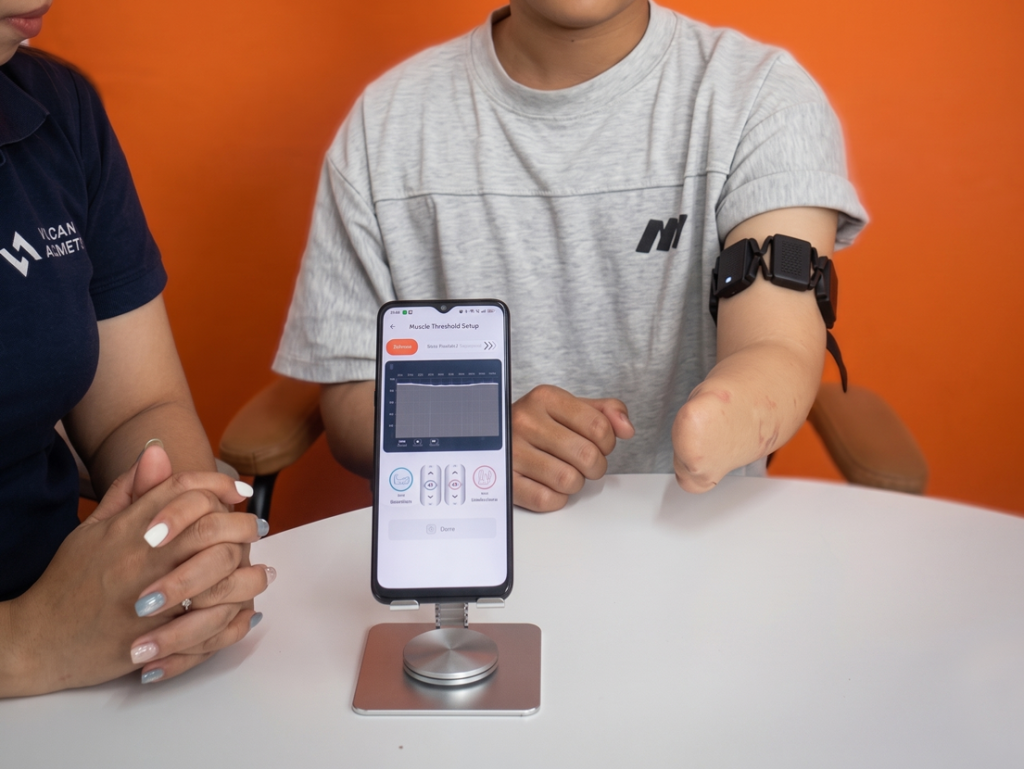
evidence-based calibration of muscle contraction thresholds without the need for complex external diagnostic equipment.
These gaps extend fitting timelines, reduce patient confidence, and can limit long-term prosthetic adoption.
Real-Time Signal Visualization with the Vulcan Myoband
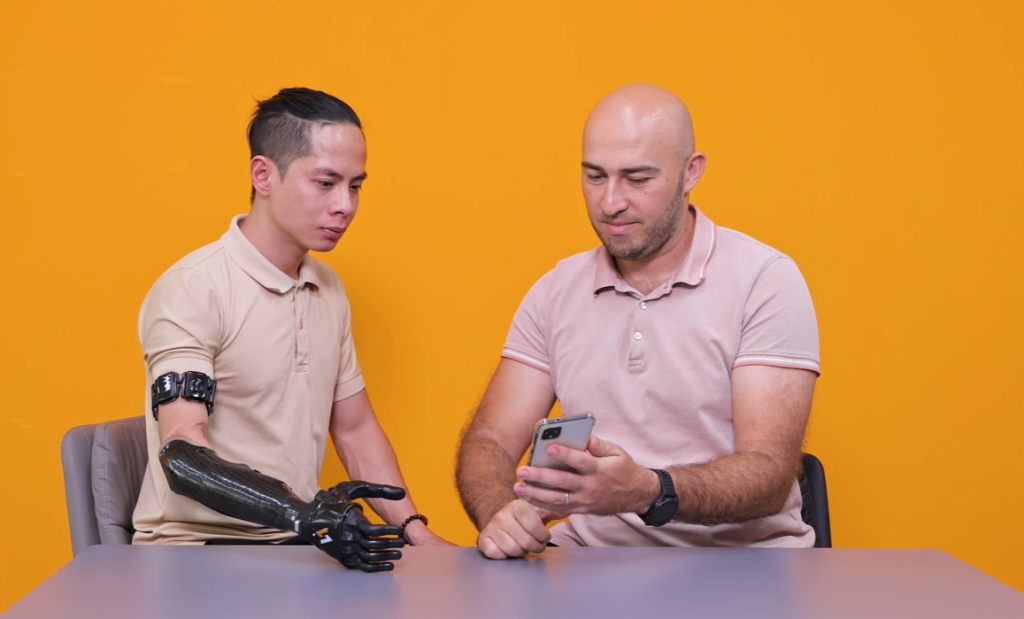
The Vulcan Myoband addresses this directly by streaming real-time EMG and inertial motion (IMU) data through the Vulcan mobile app by putting objective signal information in the hands of both clinicians and patients during every stage of care.
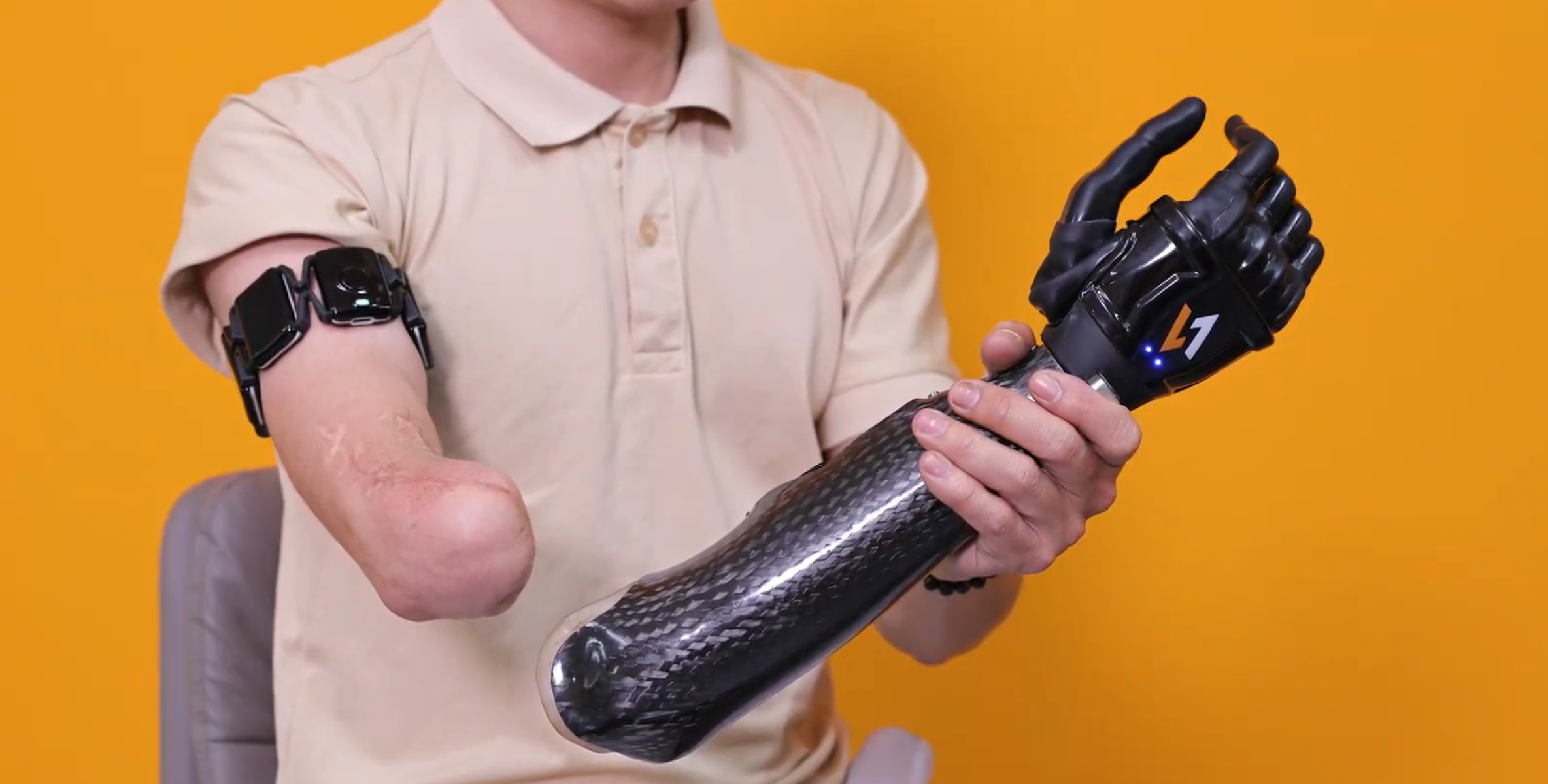
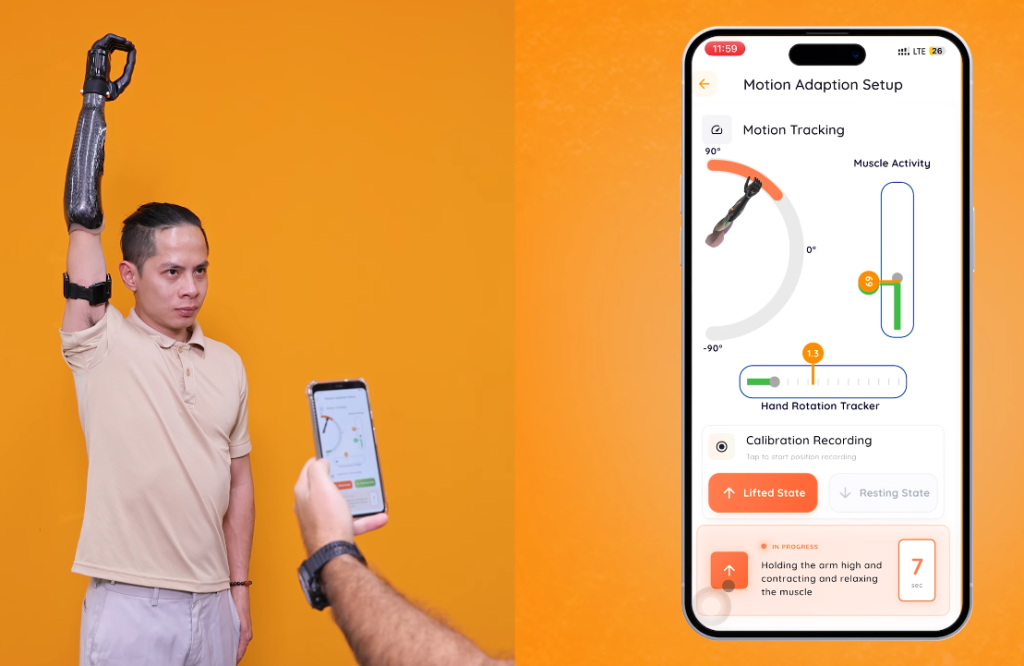
Worn as a sensor band around the residual limb, the Myoband captures muscle activation patterns, contraction timing, and arm movement dynamics simultaneously. Proprietary signal-processing algorithms convert raw biosignals into clear visual feedback, and the system automatically calculates and establishes activation thresholds calibrated to each individual’s muscle strength.
The result is a dual-purpose interface designed for both clinical depth and patient clarity:
- For clinicians: Detailed signal waveforms, contraction strength metrics, and motion data that accessible with a few taps, without additional diagnostic equipment.
- For patients: A straightforward visual scale of muscle signal strength, helping them understand and actively engage with their own rehabilitation.
This visual feedback loop supports a well-established principle in motor rehabilitation: when patients can see their muscle activity in real time, the brain reconnects with and learns to control those muscles more effectively.
Clinical Applications and Benefits
Real-time EMG and IMU visualization through the Vulcan app supports more informed, efficient prosthetic care across five key areas:
1. Objective myoelectric assessment
Before a socket is even fabricated, clinicians can use the Myoband to verify whether a patient can generate stable, consistent muscle signals. This supports earlier and more confident prosthetic prescription decisions — reducing the risk of misclassifying candidates as unsuitable for myoelectric control.
2. Streamlined clinical workflow
Signal capture, threshold visualization, and contraction analysis are all built into a single app. Clinics can conduct muscle assessments without investing in separate EMG diagnostic tools, reducing setup time and improving overall appointment efficiency.
3. Evidence-based calibration
Visual feedback on contraction strength and response speed allows precise adjustment of threshold levels and control sensitivity. Clinicians can identify and minimize excessive muscle exertion, a common contributor to fatigue and long-term abandonment, with measurable data rather than subjective judgment.
4. Data-driven rehabilitation
Stored signal and motion metrics can be reviewed over time, allowing therapists to track muscle activation trends, monitor recovery milestones, and adjust training plans based on objective progress data rather than recall alone.
5.Outcome measurement and reporting
Quantitative biosignal data provides structured, reproducible metrics that contribute to clinical reporting and formal outcome assessments — supporting both individual patient care and broader service evaluation.
From Experience-Based to Evidence-Based Prosthetic Fitting
By making biosignal information visible, measurable, and shareable, the Vulcan ecosystem helps shift prosthetic fitting from a largely experience-dependent process toward a more data-guided clinical workflow.
Real-time EMG and motion visualization gives patients a clearer understanding of their own control strategies, accelerates training, and builds the kind of long-term confidence that drives consistent prosthetic use.