
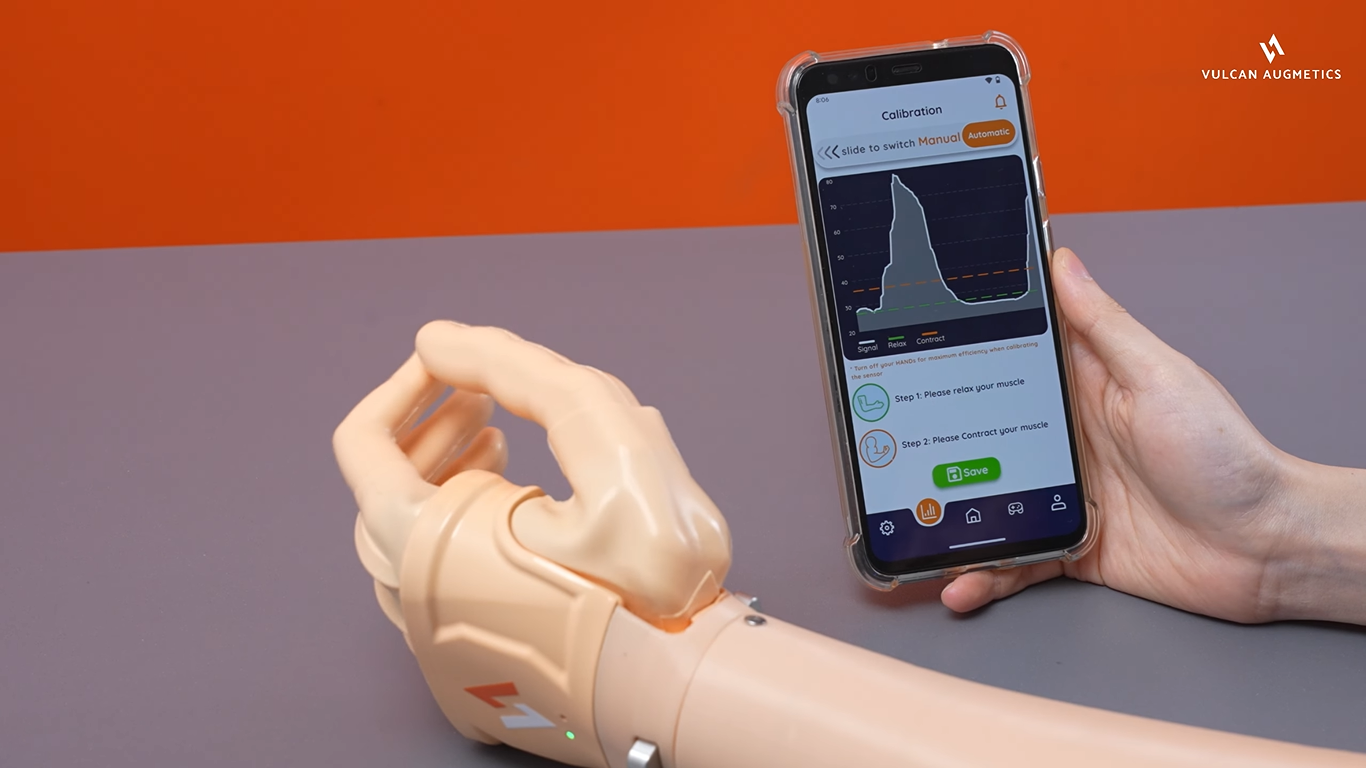
Adaptive Control

Adaptive Threshold Control: How Vulcan Keeps Prosthetic Response Consistent in Daily Life

The idea behind traditional myoelectric threshold control is simple. A lower muscle contraction opens the hand. A stronger one closes it. Clinicians set the levels, patients learn the pattern, and it works at least in the clinic. The issue is that muscle signals don’t stay consistent once the patient leaves. Why EMG Signals Don’t Stay Consistent The difficulty isn’t the threshold method itself. It’s that EMG signals naturally vary with fatigue, posture, and electrode contact. Static thresholds have no way to account for that variation. A calibration that feels stable in the clinic can behave differently at home, not because anything was set up incorrectly, but because the signal environment has changed. For clinicians, this often means repeated adjustments at follow up. For patients, it can mean a device that feels less predictable than expected, which over time affects confidence and daily use. How Vulcan Handles It Differently Vulcan keeps the same basic threshold logic — lower activation for one action, higher for another — because it works and patients understand it. What changes is that the thresholds aren’t fixed. The Myoband combines multi-channel EMG sensing with an integrated IMU that tracks arm movement in real time. Using both signals together, the control algorithm adjusts thresholds dynamically based on what the arm is actually doing at any given moment. When someone lifts their arm to reach for something, their muscles naturally tighten to stabilize the limb. A static system may read that as a potential command. Vulcan reads it as posture, and holds back. When the arm is relaxed and a deliberate contraction comes through, the system recognizes it as intentional and responds. Same threshold logic patients are already familiar with, one that adapts to real conditions rather than assuming they stay constant. What the Data Tells Clinicians Over Time Because the system logs threshold values during calibration and regular use, clinicians build a picture of how each patient’s muscle performance changes over time. Are activation levels becoming more consistent? Is the patient needing to contract harder than before? That kind of longitudinal insight is difficult to get from a conventional setup, where threshold changes happen by feel and little gets recorded systematically. Having it available makes follow-up conversations more grounded and gives rehabilitation teams something concrete to work from when planning training adjustments. What It Means in Practice For patients: Day-to-day control feels more predictable. Fewer unexpected hand movements, less frustration when the device doesn’t respond as expected. The learning curve stays manageable because the underlying logic doesn’t change, it just holds up better under real conditions. For clinicians and CPOs: The calibration process stays familiar. The difference is fewer return visits for threshold tweaks, and more confidence that settings will hold between appointments. For rehabilitation teams Longitudinal signal data adds a layer of objectivity to recovery tracking that conventional systems don’t easily provide. Learn more about Vulcan
Adaptive Threshold Control: How Vulcan Keeps Prosthetic Response Consistent in Daily Life Read More »

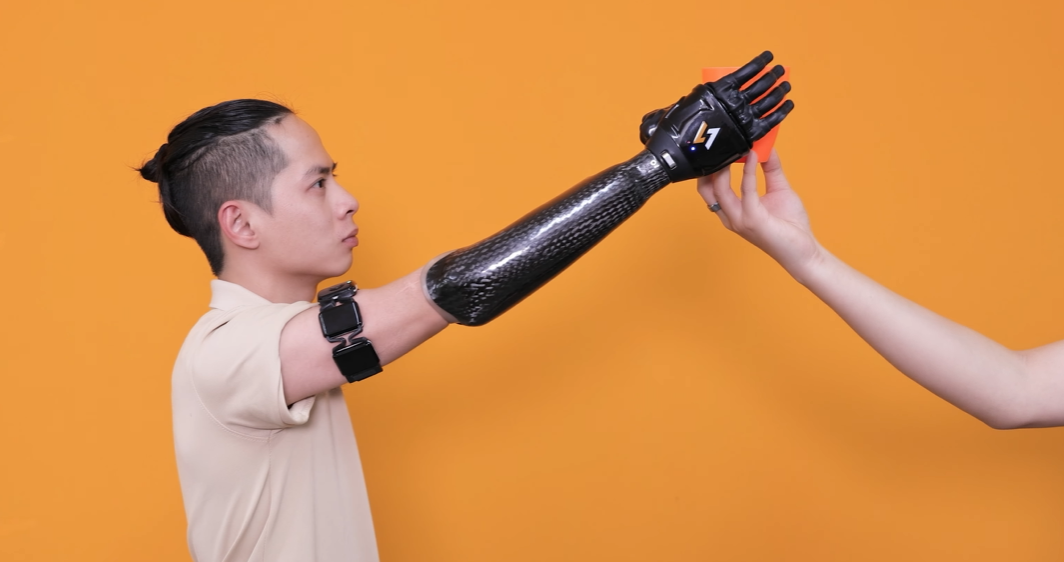
Motion Tracking: Context-Aware Control for Upper-Limb Prosthetics

When a patient lifts or repositions a prosthetic arm, their muscles naturally contract slightly to stabilize the limb. These postural contractions generate EMG signals and to a conventional myoelectric system, they can look identical to an intentional command. In the upperlimb prosthetic industry, this is known as unintended activation. Why unintended activation happens As the patient lifts or positions the prosthetic arm, the muscles naturally contract slightly to stabilize the limb. This postural muscle activity generates EMG signals that may resemble intentional commands. Conventional myoelectric systems typically respond to signal amplitude alone if the amplitude of one channel is simply higher than the other, the hand will automatically open or close. Consequently, they cannot reliably distinguish between: Research has shown that changes in limb position can alter EMG signal characteristics, increasing the risk of false triggers in traditional control systems. The result: sudden, accidental release of objects during everyday activities such as reaching or adjusting posture. In the upper-limb prosthetic industry, sudden accidental release of a held object due to postural muscle signals is called unintended activation – one of the most reported frustrations among prosthetic users in daily life. Vulcan Motion Tracking The Vulcan Motion Tracking system, integrated into the Myoband sensor band, combines EMG sensing with inertial motion data (IMU) to create a context-aware control model. By continuously monitoring arm angle, movement state, and muscle activation thresholds, the system can interpret the patient’s intent more accurately. For example: Scenario System Response Arm is raised + EMG increases slightly Recognized as postural stabilization → no command triggered Arm is stable + EMG rises above threshold Recognized as intentional command → prosthetic hand activates All sensor inputs are time-synchronized and processed through a signal-fusion engine. This allows the control logic to respond differently depending on motion context, velocity, or inferred muscle fatigue without introducing noticeable delay. This level of integration remains challenging for many conventional systems, as it requires advanced algorithms, real-time processing capability, and a wearable sensing architecture. Benefits for patients and clinicians By combining motion tracking with EMG analysis, the Vulcan system provides several practical advantages for both patients and clinicians. 1. Lower risk of unintended object release One of the most common frustrations reported by prosthetic users is accidentally dropping or releasing objects during everyday tasks, particularly when reaching overhead, adjusting posture, or shifting arm position. Because the Vulcan system continuously monitors both muscle activity and arm movement, it can distinguish between a postural contraction and a deliberate command. This significantly reduces the likelihood of false triggers, helping patients handle cups, tools, or fragile items with greater confidence throughout the day. 2. More natural interaction Conventional systems react to muscle signals in isolation, without considering what the arm is actually doing at that moment. The Vulcan Motion Tracking system adds spatial context to every signal — meaning the prosthetic hand responds based on what the patient is likely trying to do, not just what their muscles are momentarily producing. The result is a control experience that feels more intuitive and less mentally demanding, especially during complex or multi-step activities. 3. Objective rehabilitation data The Vulcan app records motion and EMG signal metrics during use, giving clinicians access to real, quantifiable data between appointments. Instead of relying solely on patient recall or in-clinic observation, therapists can review how the prosthesis is being used in daily life — identifying patterns, tracking progress over time, and making more informed adjustments to training plans or device settings. This supports a more data-driven approach to rehabilitation and outcome measurement. 4. Improved long-term usability Residual limb volume and muscle condition naturally change over time due to weight fluctuation, activity level, socket fit, or the progression of rehabilitation. Static threshold systems can become less reliable as these changes occur. The Vulcan system uses adaptive thresholds and continuous movement awareness to maintain consistent performance as the patient’s limb evolves, reducing the need for frequent recalibration and supporting more stable, long-term prosthetic use. Faster setup. Better outcomes. Vulcan’s motion aware control architecture represents a new generation of AI and data-driven upper-limb solutions — designed for real clinical workflows and real patient lives. Learn more about Vulcan →

Motion Tracking: Context-Aware Control for Upper-Limb Prosthetics Read More »